After HC stay on stilt-plus-four (S+4), town planning asks HSVP how infra funds were used
After HC stay on stilt-plus-four (S+4), town planning asks HSVP how infra funds were used
Following the HC stay on S+4, town planning requests HSVP how the infra funds were utilized.
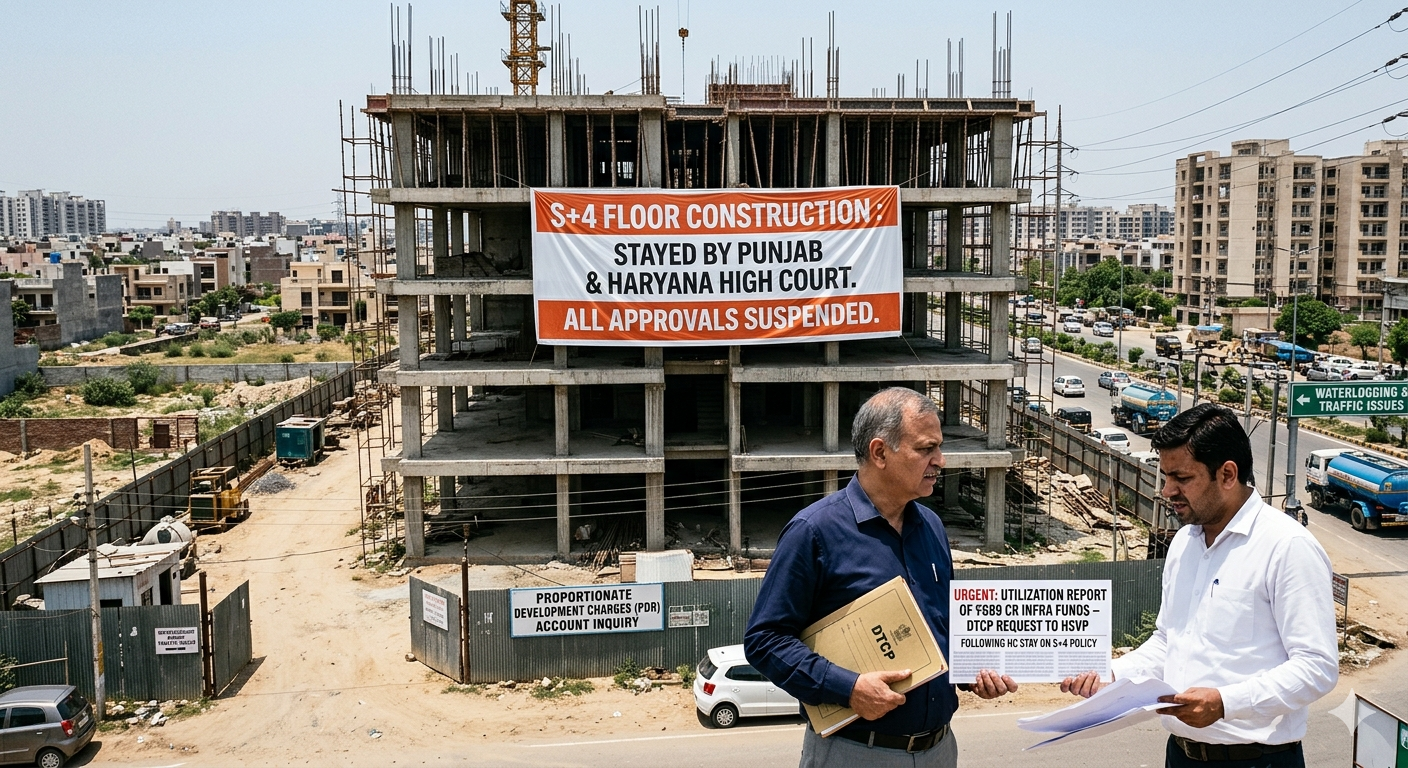
Gurgaon: As Haryana has stalled all approvals of stilt-plus-four (S+4) residential construction pending on an interim stay by Punjab and Haryana high court, the department of town and country planning (DTCP) has sought a utilisation report of Haryana of the Rs 689 crore it had handed over to the development agency to carry out the upgrades.
The sum, which was placed under the PDR (proportionate development charges) account, was to finance urban infrastructure improvements which were related to density. Pressure on infrastructure is one of the major concerns of the S+4 policy that petitioners have voiced in high court.
A top DTCP official has requested the HSVP to provide information in details regarding how the development charges that have been raised to facilitate infrastructure augmentation have been spent, which will aid in determining the current situation and future action.
The April 3 order by DTCP applies to residential plotted projects within Haryana, including Gurgaon which is densely populated; a region where the policy had contributed to an alarming increase in construction works. The town and country planning director Chander Shekhar Khare, posted the letter to the HSVP chief administrator, director general (housing for all), urban local bodies dire; and HSIIDC managing director.
HC had stayed the running of the July 24, 2024 notification, and restrained the implementation of the S 4 floor policy by Haryana govt.
The official stated that the department has written letters to all the authorities involved telling them to suspend approvals at the stilt-plus-four floors immediately, and that further directions will be done in this regard, and steps will be taken accordingly.
The department also said that no layouts, zoning plans or service plans were to be granted that included enhanced density which was associated with S+4 floors. It also dictated that online applications should cease to accept applications of such permissions through online platforms such as the S+4 portal and HOBPAS (Haryana Online Building Plan Approval System).
HC noted that the growth of the number of floors without corresponding upgrades to the civic services may cause an extra burden to already overstretched urban systems, such as sewage systems, drainage, traffic circulation and other vital services.
The same concerns were expressed by the April 3 communication issued by DTCP, which stated that such cities like Gurgaon are already experiencing the problem of infrastructure stress due to the increasing population density and that the uncontrolled growth in vertical development may cause the waterlogging of low-lying places, traffic jams, and the increased burden on the sewage treatment plant.
The department also reported that HSVP has not provided a status report of how the funds were expended, although it has received previous correspondence. Upon being contacted by TOI, HSVP officials indicated that a detailed response, including formulation of SOPs and use of funds would be provided soon.
Officials said lack of clarity over the use of these funds has deepened concerns about whether sufficient infrastructure upgrades were carried out to support the S+4 policy. Earlier the department had been pursuing standard operating procedures (SOPs) and specific plans of infrastructure augmentation, which are yet to be implemented.
The intervention of the high court, according to the urban planners, may have significant effect on the real estate activity in Gurgaon and other cities that are undergoing rapid urbanisation. The S+4 policy had permitted more independent floors on plotted land and this had led to a drastic increase in builder floors and an increase in the supply of housing. At this point, it is uncertain which activities should take place. Authorities are instructed to be very strict in following the directions of the court till further notice, which in effect has frozen any new approvals in the policy and has put the existing approvals under review.
News Source : Times of India
Frequently Asked Questions
How much should I keep as a buffer beyond the price?
Set aside for stamp duty, registration, GST where it applies, interiors, and a contingency. A buffer of a meaningful share above the base price is prudent.
Is a home loan pre-approval useful?
Yes, a pre-approved loan tells you your budget, speeds up booking and strengthens your negotiating position with sellers. Get it before you shortlist seriously.
How do I choose between two similar projects?
Compare the builder record, RERA status, carpet area, real amenities, connectivity and total cost, not just the headline price. Visit both before deciding.
What stamp duty and registration charges apply in Gurgaon and NCR?
Stamp duty and registration vary by state and are usually a few percent of the property value, with a small rebate for women buyers in many states. Confirm the current Gurgaon and NCR rate before you budget.
How much home loan can I get to buy in Gurgaon and NCR?
Most buyers get a loan for 75-90% of the value, tied to income and credit score. Our home loan by salary guide shows the ranges.
What documents do I need to buy property in Gurgaon and NCR?
Identity and address proof, PAN, income papers for a loan, and the property title chain, approvals and latest tax receipts. Keep both sides KYC ready for registration.
How do I check if a project is RERA-registered?
Search the state RERA portal by project or builder name for the registration number and approved plan. Our RERA check guide explains it.
Can NRIs buy property in Gurgaon and NCR?
Yes, NRIs can buy residential and commercial property in India, though not farm land. Payments must come through banking channels, and a trusted power of attorney helps if you are abroad.
What taxes apply when I sell property in Gurgaon and NCR?
You pay capital gains tax on the profit, lower if you hold beyond the long-term period, with reliefs if you reinvest in another home. Take advice before you sell.
Is it a good time to buy in Gurgaon and NCR?
Timing matters less than buying the right property at a fair price with clean papers. If a home fits your budget and needs, waiting for a perfect market rarely pays.
How do I verify a property title in Gurgaon and NCR?
Check the chain of ownership, the latest record, any loan or lien and pending dues, and match the seller identity to the title. A local lawyer can vet the deed.
What should I check during a site visit in Gurgaon and NCR?
Construction quality, water and power backup, the neighbourhood, road access, and how the actual unit compares to the brochure. Visit at different times of day if you can.
Can I negotiate the price in Gurgaon and NCR?
Resale and ready inventory are usually negotiable, while fresh launches have fixed rates but may waive some charges. Compare recent deals nearby to judge a fair price.
What is the difference between carpet area and super area?
Carpet area is the usable space inside your walls; super area adds a share of common areas. Always confirm the carpet area you actually get before comparing prices.
What extra costs come beyond the price in Gurgaon and NCR?
Budget for stamp duty and registration, GST on under-construction homes, parking, club and maintenance deposits, and loan fees. Ask for a full cost sheet upfront.
How does Realty Hunting help me buy in Gurgaon and NCR?
We share verified listings, honest area advice and the real paperwork picture, and connect you with builders and sellers. Reach out and we will shortlist options that fit your budget.