
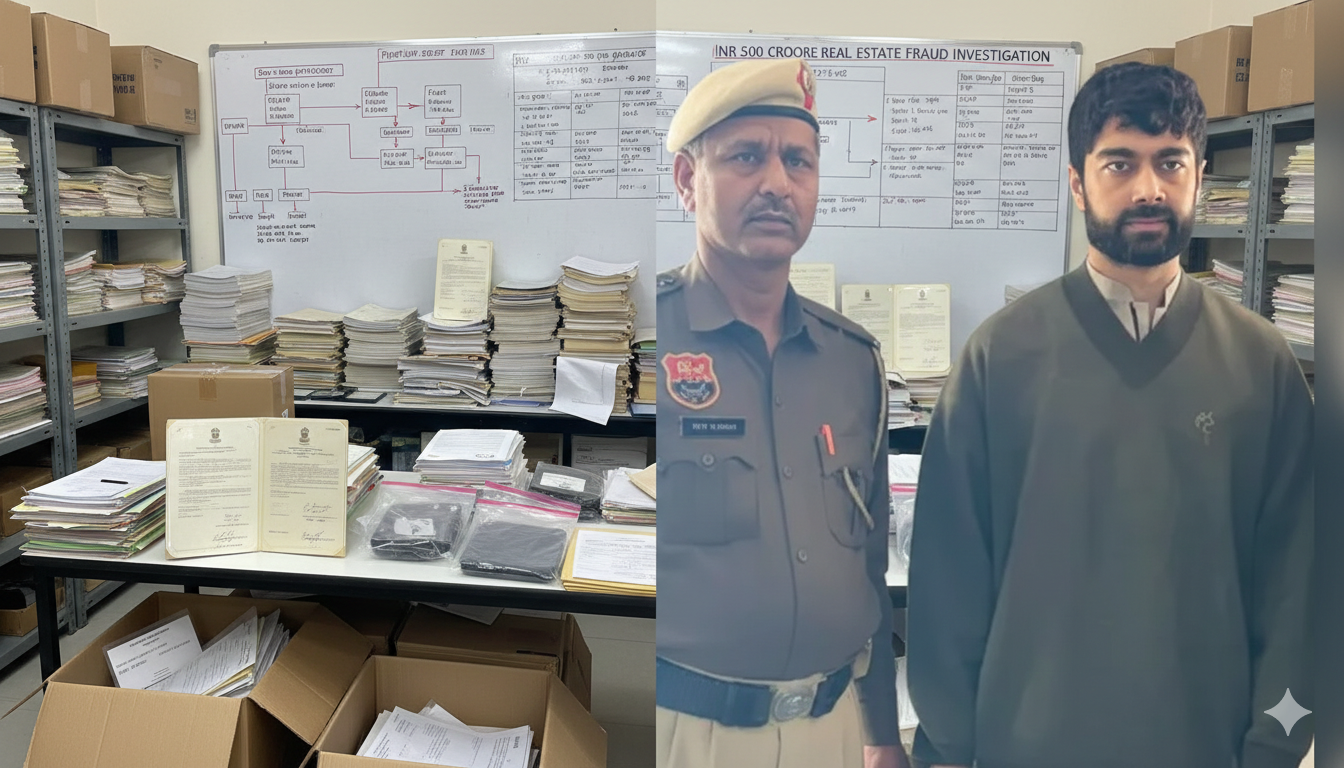
Dhruv Sharma, the MD of Gurugram’s 32nd Avenue commercial project has been arrested for reportedly pulling off a massive INR 500 crore real estate fraud. Police claim that Sharma had sold off the same commercial floor to around 25 buyers by providing a similar duplicate agreement and forged documents, offering ownership and assured returns. Complaints popped up about access being denied and legal papers going missing. Several FIRs have been filed and the financial trail, bank records and any purported shell companies are being probed. The case exposes holes in investor protections and controls on property transactions in India.
The Gurugram police have arrested Dhruv Sharma, founder, CEO and managing director of 32nd Avenue that is being developed on the Delhi-Gurugram border, over an INR 500 crore real estate scam. Police said that Sharma sold the same commercial floor to around 25 people ensuring ownership rights, long term lease returns and buy back guarantee by preparing fake agreements and forged documents. The suspicious activities reportedly date back to 2021 to 2023.
The fraud was discovered after investors said they were unable to gain access to their units, and that the closure had been delayed numerous times without being provided with legal ownership documents. The complaints included that Tram Ventures and INR 2.5 crore for a unit but had not received the legal transfer of it. A similar unit document was made for various investors and leases of up to 30 years were granted in some cases to keep the properties running even as who owned them was disputed, according to a probe.
Multiple FIRs related to cheating, forgery and criminal conspiracy have been lodged by the authorities. Investigators are examining bank records, financial transactions and the possible role of shell companies that worked on the project. It is believed that many more investors from different cities were a victim of the fraud, as per reports suggesting that it was planned on a massive scale.
Sharma was already well known in business circles, as the recipient of a Forbes 30 under 30 accolade, and 32nd avenue was marketed as prime commercial real estate. But it leaves questions about transparency, documentation integrity and regulatory oversight in commercial real estate deals. Doubts have also been raised on the non-payment of statutory dues like TDS and employee salaries, and suspended rental payments committed to investors. There were also suggestions that some brokers involved made large commissions, which would imply overpricing at more than one stage.
The incident highlights the importance of proper due diligence on the part of investors, and exposes potential loopholes in property transaction supervision. Courts have requested in-depth reports from the police, and additional investigation will look into financial flows, authenticity of documentation and potential collusion among middlemen and banks.