Mall vs High Street vs Society Shop: Where Retail Money Works
Retail property comes in three main flavours in India: the enclosed mall, the open high street, and the humble society shop. Each earns differently, risks differently, and suits a different investor. And if your tenant will be a cafe or restaurant, the building itself must qualify for the job. This guide compares the three formats and covers what F&B spaces specifically need.
The three formats at a glance
| Format | Character | Typical strength |
|---|---|---|
| Enclosed mall | Air-conditioned, managed, anchor-led | Destination footfall, brand tenants |
| High street | Open shopping street or arcade | Visibility, lower running costs |
| Society shop | Retail inside or beside housing | Captive daily-need demand |
What makes a mall work
Malls live or die on footfall, and footfall follows a formula: strong anchor stores and a multiplex to pull crowds, a deep residential and office catchment around the location, easy parking and access, and an operator who curates tenants and maintains the experience. A mall with those pieces compounds; one without them empties floor by floor. For an investor, the building's operator and occupancy history matter more than the city's mall reputation, and the heavy CAM charges of enclosed formats must be counted in every yield calculation.
The high street's different economics
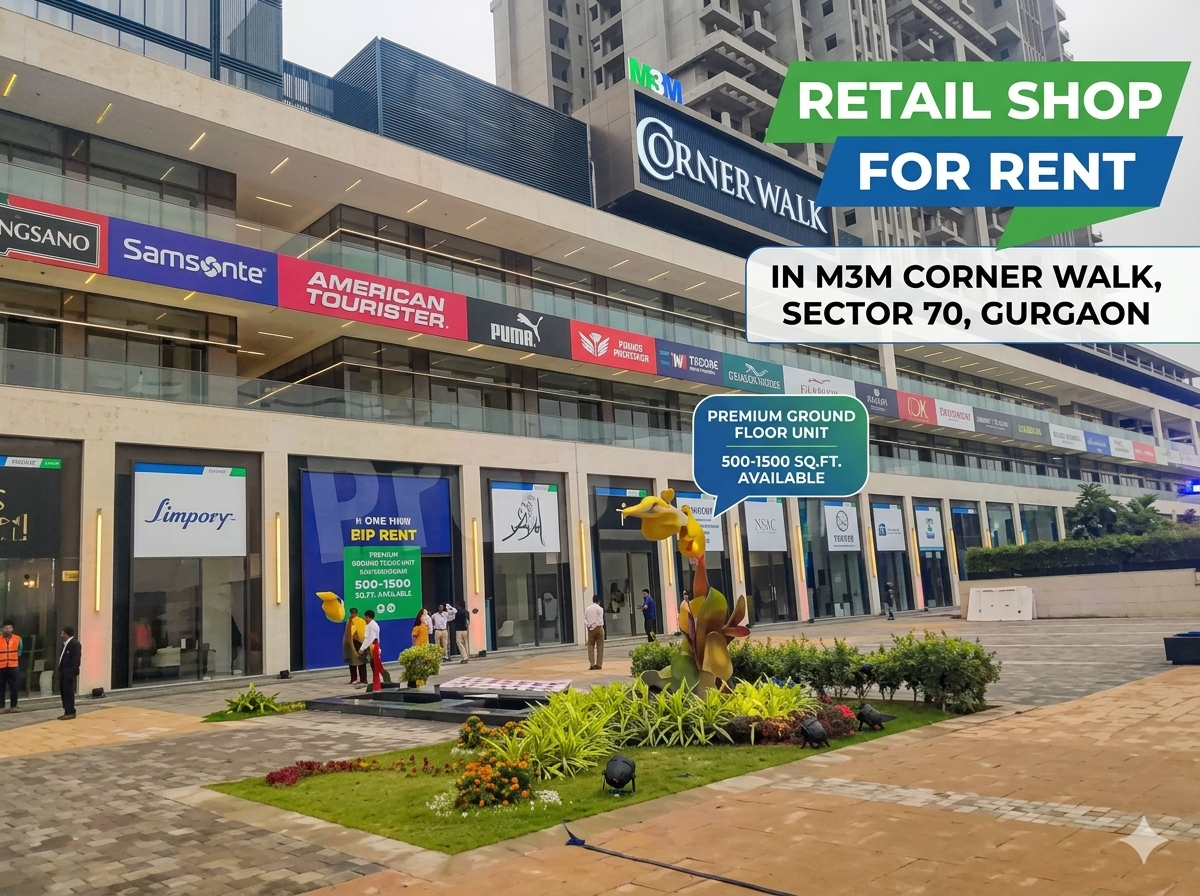
A high street mall, the open-format shopping street modern projects build, trades the mall's climate control for visibility and economics. Shops face the road or a walking spine, signage works all day, CAM runs lower, and customers park and walk straight in. India's most valuable retail addresses are high streets, Khan Market being the famous proof, a story our Khan Market piece tells. The format's risk is management: without an operator curating tenants, a high street can drift into a random mix that dilutes everyone's business.
The society shop's quiet strength
Society shops serve the daily needs of the housing around them: groceries, chemists, salons, tuition, dairy. Their customers live thirty seconds away and come daily, which makes tenancies stable and vacancies short. Rents are modest but dependable, and entry prices are the lowest of the three formats. In large townships and mixed-use projects, the resident base is effectively captive. The limits are equally clear: growth is capped by the society's size, and premium brands will never come. It is the fixed-deposit of retail property.
What F&B and restaurant spaces need
Food and beverage tenants pay well but demand specific infrastructure, and a unit lacking it simply cannot host them. The essentials: exhaust and ventilation shafts for kitchens, provision for gas banks or piped gas, grease traps and adequate drainage, higher power loads, and ideally terrace or spillover seating rights. Frontage and visibility drive walk-ins, and parking matters for destination dining. If your investment plan assumes a restaurant tenant, confirm these provisions exist in the building's design before you buy, not after, alongside the location logic in our shops in Gurgaon guide.
Choosing your format
Buy mall space only with a proven operator and visible occupancy. Buy high street for visibility-led brands and better cost economics, checking who manages the mix. Buy society shops for stable, modest, low-drama income. And whichever format, judge the specific unit's position, corner, atrium-facing, ground floor, spine-facing, because inside every format, position decides who captures the footfall.
Reading footfall before you buy
Whatever the format, verify the crowd with your own eyes before money moves. Visit the property on a weekday afternoon, a weekday evening and a weekend, and count what you see: shoppers actually carrying bags, tables actually occupied, shutters actually open. High occupancy with dead footfall is a warning; modest occupancy with busy tills can be an opportunity. Talk to two or three existing shopkeepers about their sales trend and the operator's behaviour on maintenance and marketing. Sellers show projections; tenants tell truths. An hour of this groundwork filters retail deals better than any brochure or pitch deck ever will.
Frequently asked questions
What ensures maximum footfall in a mall?
Strong anchors and a multiplex, a deep catchment, easy access and parking, and an operator who curates tenants and maintains the experience. Weakness in any of these drains traffic.
What is the difference between a mall and a high street mall?
An enclosed mall is air-conditioned and internally managed with common entries; a high street is an open format where shops face the road or a walking spine, with lower CAM and direct visibility.
Why are society shops considered stable investments?
Their daily-need customers live in the housing around them, so demand is captive and constant. Tenancies stay stable and vacancies are short, though rents remain modest.
What do F&B spaces structurally require?
Kitchen exhaust and ventilation shafts, gas provision, grease traps and drainage, higher power loads, and ideally spillover seating rights. Without these, restaurant tenants cannot operate.
What makes a layout suitable for a restaurant?
Good frontage and visibility, ventilation infrastructure, adequate power and drainage, parking access, and seating depth. Corner and spine-facing units with terrace rights work best.
Which retail format gives the best returns?
High streets and well-run malls can deliver higher rents; society shops deliver steadier ones. Returns follow the specific building's footfall and management more than the format's label.
Retail property is a footfall business wearing real estate's clothes. Pick the format that matches your risk appetite, then pick the position that captures the crowd. Our team can help you compare shops across malls, high streets and societies in NCR.