Jhajjar-Farukhnagar Belt: Logistics and Real Estate Opportunities

West of Gurgaon, past the last high-rises, lies a belt most city buyers have never studied and most logistics operators know intimately: Jhajjar and Farukhnagar. Warehouses line its roads, a Reliance-promoted township is rising on its plains, and affordable plotted colonies are multiplying at prices Gurgaon abandoned a decade ago. This guide maps the logistics and real estate opportunities in the Jhajjar-Farukhnagar belt, and who should be paying attention.
Where the belt sits and why it works
Farukhnagar lies roughly 20 km west of central Gurgaon, with Jhajjar's sectors and towns spreading beyond it into Haryana. The geography explains the economics: the belt touches the KMP Expressway ring, connects to NH-48 and the Pataudi Road, and sits close enough to Gurgaon and IMT Manesar to serve both. Land here costs a fraction of city rates, which is exactly what warehousing and affordable housing need to work.
The logistics engine
Farukhnagar has quietly become one of NCR's genuine warehousing clusters. The Garhi Harsaru inland container depot nearby moves rail freight for the region's exporters and importers, and the roads around Farukhnagar and Pataudi host large fulfilment and distribution centres serving Gurgaon's consumption. The KMP Expressway lets goods loop around Delhi rather than through it, multiplying the belt's usefulness. For investors, that translates into demand for industrial land, built warehouses, and the worker housing that follows them, dynamics our warehousing guide and industrial real estate guide frame nationally.
The Reliance MET City factor
The belt's largest single bet is the Model Economic Township, the Reliance-promoted industrial city in Jhajjar spread over thousands of acres. Companies across manufacturing and logistics have taken land there, and each operational unit adds jobs that need homes, markets and services nearby. Alongside it, institutional anchors have arrived: the AIIMS campus at Badsa in Jhajjar serves the region and employs thousands. Township-scale employment is precisely the force that converted Gurgaon's own villages into sectors, and the pattern is repeating here at an earlier, cheaper stage.
The residential opportunity
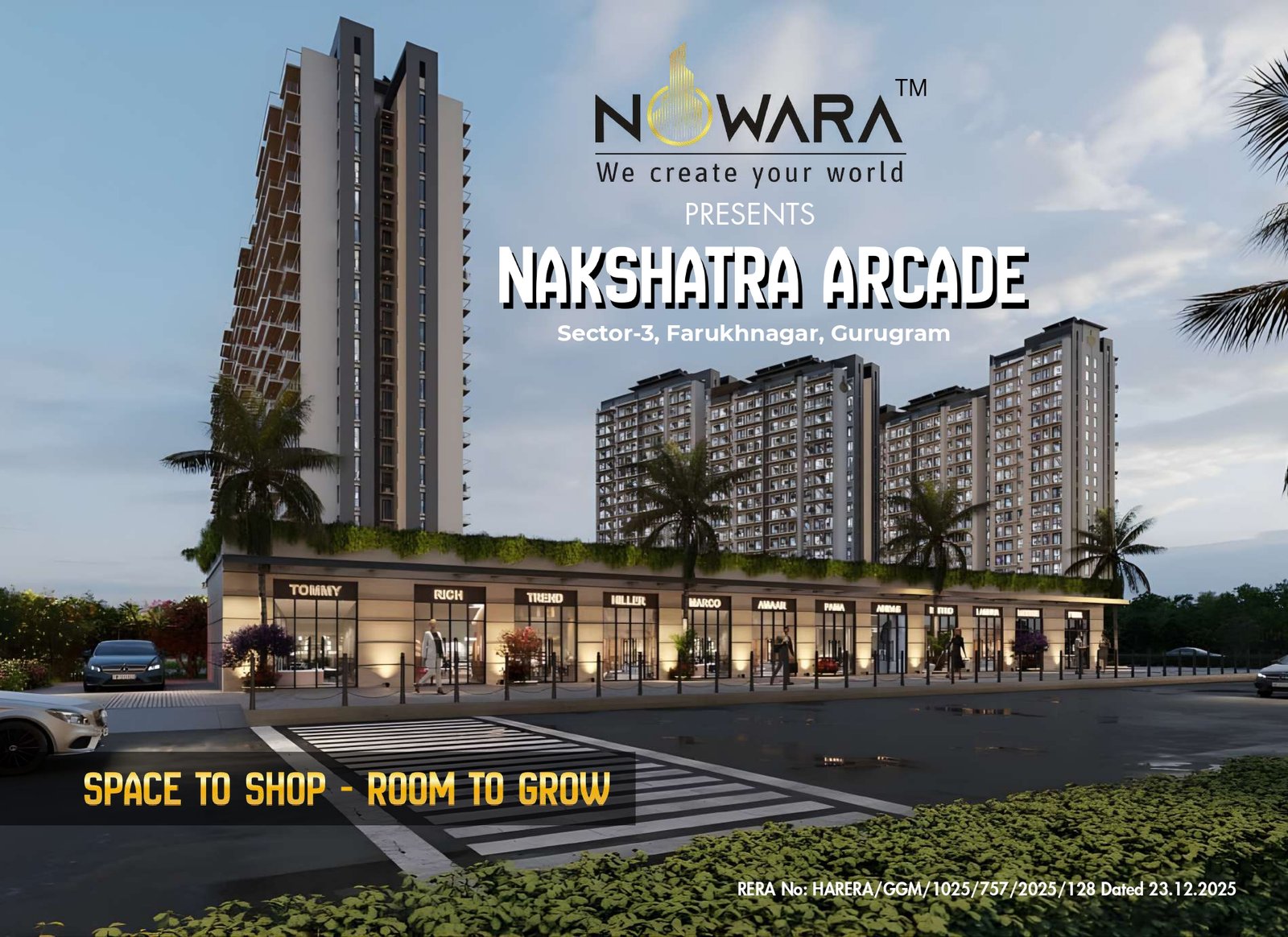
Housing in the belt is plot-led and affordability-driven. Farukhnagar's DDJAY colonies offer gated plots and floors at entry prices around a third of Gurgaon's, with projects we track in our Farrukhnagar guide, while Jhajjar's sectors add licensed plotted schemes at some of NCR's lowest organised-market rates, mapped in our Jhajjar guide. Buyers are a mix: local end-users, Gurgaon workers priced out of the city, and investors banking the land ahead of the belt's industrial build-out. Rental demand today comes from warehouse staff and site workforces, modest in rate but consistent.
The plain risk ledger
This is an early-stage belt, and its risks are the classic ones. Social infrastructure, schools, hospitals, organised retail, trails far behind Gurgaon, and daily life is small-town. Appreciation depends on the industrial story maturing on schedule, and township timelines stretch. Liquidity is thinner: selling a plot here takes longer than in the city. And the paperwork burden is real, since plotted colonies vary widely in approval quality, making the checks in our land verification guide mandatory rather than advisable. Price the belt as a five-to-ten-year position, never a quick trade.
Who should buy here, and what
Logistics operators and industrial investors should study land and built units along the KMP and Farukhnagar-Pataudi roads, where the freight economy already pays rent. Patient plot investors should stick to licensed, RERA-registered colonies near the employment anchors, MET City's influence zone and Farukhnagar's connected pockets, buying at today's low base. End-users working in the belt or western Gurgaon get the most house for the least money in NCR's organised market. Buyers needing city infrastructure today should look closer in, and pay accordingly.
Frequently asked questions
What logistics opportunities exist in the Jhajjar-Farukhnagar belt?
Warehousing land and built units serving NCR distribution, supported by the Garhi Harsaru container depot, the KMP Expressway loop and proximity to Gurgaon and IMT Manesar.
What is the MET City in Jhajjar?
The Model Economic Township, a Reliance-promoted industrial city across thousands of acres in Jhajjar, hosting manufacturing and logistics units whose jobs anchor the belt's long-term housing demand.
Are plots in Farukhnagar a good investment?
Licensed DDJAY and plotted colonies offer NCR's lowest organised entry prices with genuine employment drivers nearby. They suit patient investors who verify approvals and hold five to ten years.
How is the belt connected?
Through the KMP Expressway ring, NH-48 access, the Pataudi and Farukhnagar roads, and rail freight via the Garhi Harsaru depot, with Gurgaon roughly half an hour from Farukhnagar.
What are the risks of buying in this belt?
Thin social infrastructure, industrial timelines that can stretch, slower resale liquidity, and uneven approval quality across colonies, all manageable with diligence and a long horizon.
Who is buying in Jhajjar and Farukhnagar today?
Logistics and industrial players, priced-out Gurgaon workers, local end-users, and land investors positioning ahead of the MET City and warehousing build-out.
The Jhajjar-Farukhnagar belt is NCR's supply chain wearing a real estate opportunity, cheap land, real freight, and an industrial township filling in. Buy the approved paper, sit with the timeline, and the belt's growth does the work. Our team tracks its colonies and corridors closely and can show you verified options at every ticket size, from a logistics-facing plot along the KMP to an affordable DDJAY floor near the employment anchors, with an honest read on which pockets are genuinely moving and which are still just promise.