
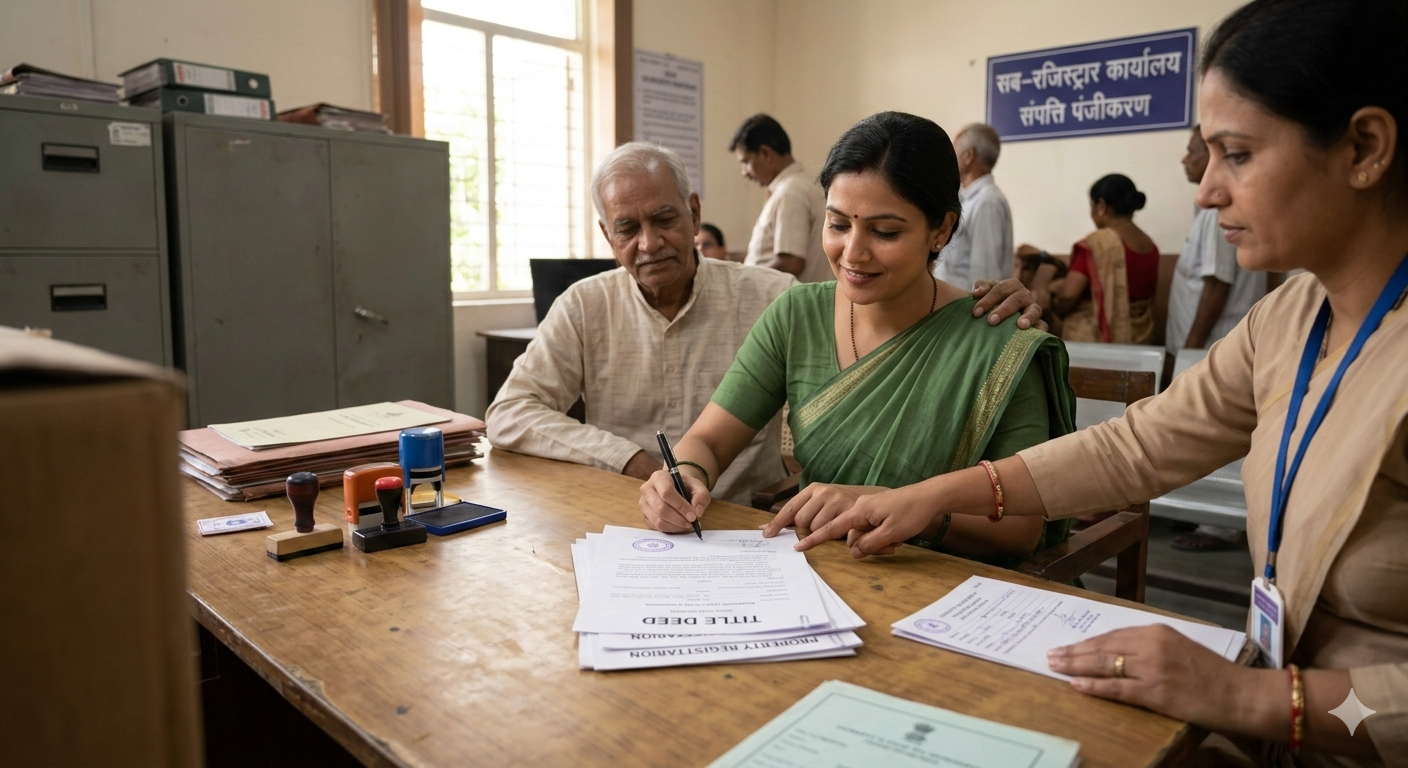
Women Property Rights Act, A Guide to Women’s Property Rights
Wealth Creation Through Ownership: A Handbook of Women’s Property Rights
For decades, both tradition and antiquated statutes blocked women from becoming property owners at any level. Now, legal reforms are changing that narrative, making sure daughters, wives and mothers take their rightful seat at the table.
The Shift in Inheritance Rights
Traditionally, many legal systems favored men (agnatic succession). But huge changes — like those wrought by the landmark Hindu Succession (Amendment) Act, 2005 in India — have transformed the landscape.
Rights of Coparcenary: Daughters are recognised as coparceners by birth and they own equal rights in the ancestral property, just like sons.
Same Ownership: A daughter’s claim to her father’s estate is equal, whether she is married or unmarried, to that of each of her brothers.
Marital Status: A married woman should not give up her right over parental property.
Rights Within Marriage and Divorce
Property rights during and after marriage remain one of the most debated areas of law.
| Property Type | Ownership Rights |
| Self-Acquired Property | Any property a woman buys with her own income belongs solely to her. |
| Matrimonial Home | Regardless of whose name is on the title, many jurisdictions now grant women the right to “reside” in the matrimonial home to prevent homelessness during disputes. |
| Stree-dhan / Dowry | Gifts given to a woman at the time of marriage (jewelry, cash, or assets) are her absolute property. She has full power to sell or gift them as she pleases. |
One of the most controversial areas of law is property rights in marriage and after divorce.
Their name always came first, and in most modern legal systems, a widow is a primary heir.
She shares in her deceased husband’s property, along with his children and mother.
In the case that a man dies without leaving behind a will ie intestate, the law generally gives preference to wife and children as Class-I heirs.
Key Takeaway: Knowledge is power. Many women forfeit their rightful inheritance, simply because they do not know that the law has changed to protect them.
Common Challenges and Roadblocks
In the face of legal progress, social obstacles remain:
Emotional Gupta: Women are pressured to sign “deeds of relinquishment,” giving up their share to their brothers, in order to keep the family together.
Deprivation of Rights: If large pieces of property are left without registration, or with unclear testamentary dispositions, they can take decades to establish ownership in court.
Illiteracy and Awareness: Rural areas continue to have a wide “gap” between law on the books and law in practice.
Pro-Tips for Protecting Your Assets
Always Register: Anything gifted or transferred should be registered. Verbal agreements carry very little weight in court.
Sign a Will: Encourage your parents and spouse to have a clear, WITNESSED will in place so that no family face conflict.
Add Your Name to the Title: If you are making financial contributions to a home, make sure you’re on the title deed as a co-owner.
The Bottom Line
Property is more than land or buildings — it’s security. When a woman owns property she has a safety net, collateral for loans, and the foundation of her future. The laws — which are skewed in your favor now more than ever — do not automatically deliver those rights to you; that takes vigilance and assertiveness on your part.
The Construction of Possession: Sole vs Limited Rights
The transition from “limited estate” to “absolute ownership” was one of the most significant shifts in law throughout history.
Limited Estate (Current Laws): Historically a woman could inherit property but only have the right to use it for her life. She could not sell it and she could not pass it on to her own heirs; it would go back to the male relatives of her husband or father upon her death.
Absolute Ownership (Modern Laws) — In almost all modern laws, when a woman inherits or acquires property she becomes its sole owner. She has the “Right of Alienation,” which means she can sell, mortgage or gift the property to whomever she chooses without having to get permission from male relatives.
Deep Dive: Specific Legal Protections
The Concept of “Matrimonial Equity”
Property obtained during the marriage is considered by many Western legal systems (such as the US or UK) and have evolving Commonwealth laws to be “community property” or “marital assets.”
Non-Financial Contribution: Courts are now also more willing to recognize non-financial contributions — like domestic labor (child-rearing, managing the home) as contributing to her right to a share of the home whether or not she put one dollar towards a mortgage.
Protecting “Stree-dhan” (Traditional Assets)
Feminist response with Stree-dhan In South Asian contexts, Stree-dhan is a powerful legal shield. Now it speaks to assets granted directly to the woman.
The Husband as Trustee: As a matter of law, when a husband (or his family) has custody of a woman’s jewelry or gifts for “safekeeping,” they are only custodians. They have no legal claim to use or sell those assets. If they resist returning them, it can be prosecuted as a “criminal breach of trust.”
Right of Residence
Even if a woman does not own an inch of her husband’s or father-in-law’s house, most “Domestic Violence Acts” (like India one) provide a Restitution or Right of Residence.
This stops a woman being booted from her own home when she is in dispute about it, and makes sure that she does not end up on the street while her case is looked at.
Comparison: Inheritance vs. Partition
Understanding how property is actually divided is crucial.
| Feature | Inheritance (Succession) | Partition (Joint Property) |
| When it happens | After the death of the owner. | During the lifetime of the owners. |
| How it’s triggered | By a Will or “Intestate” law. | By filing a suit to “break” a joint holding. |
| Woman’s Role | Inherits as a daughter, wife, or mother. | Can demand her share of the “pie” at any time if she is a co-owner. |
Inheritance: What Happens if You Don’t Have a Will?
If someone dies without having drafted a Will (Intestate), the law is unforgiving, strict and hierarchical. This varies by religion and country, but the trend is:
Class I Heirs: The widow, sons and daughters (whom we have called Class I heirs), and mother of the deceased generally receive equal shares.
The “Doctrine of Representation”: If a daughter dies before her parents, her children (the grandchildren) are entitled to the portion she would have inherited.
Practical Hurdles: The “Paperwork” Gap
Property rights typically break down at the Mutation stage, even with good laws.
What is Mutation? It’s the act of changing title ownership in municipal records.
The Trap: Families tell women they are “owners” but never go to the government to update records. A woman cannot take a bank loan or sell the land without being in possession of the record of rights (also referred to as Jamabandi or Title Deed)
Note: Your name should also appear in the “Record of Rights” at the land registry office.
Next Steps for Empowerment
If you’d like to protect your property rights for yourself or someone else, here’s what you can do next:
Search the Title: Consult a public registry to find out whose name is currently on the deed.
Legal Cross check: Insist for a look at the ‘Relinquishment Deeds’ or ‘Gifts’ to verify that they are not signed under duress
Update will: Prevent future family litigation over your own assets by having a registered Will.
Frequently Asked Questions (FAQ)
Can my father or husband simply write a will passing all the property to someone else, leaving me nothing?
The answer varies based on the property type:
Self-Acquired Property: The owner has the full rights to bequeath their own earned property through a Will in most jurisdictions.
Ancestral Property: In several systems (for instance, under the Hindu Succession Act) a father cannot WIll away a daughter’s share to ancestral property because her right is by birth not his pleasure.
I got a dowry at my wedding. Is that my “share” of the inheritance?
Legally, no. From a legal standpoint, dowry (or wedding gifts) is usually classified under Stree-dhan or personal gifts. Getting these does not terminate your legal right to an equal share of your parents’ estate unless you actually sign a Relinquishment Deed voluntarily.
What is a Relinquishment Deed? Should I sign one?
A Relinquishment Deed is a legal document through which one heir renounces their rights to a property in favour of other heirs (generally brothers).
Caution: It’s next to impossible to cancel once you are signed and registered.
Never sign “blank” papers, or anything called “formal family settlements,” without reading the fine print.
What happens to the house if I have co-ownership with my husband and we decide to divorce?
If your name appears on the title deed, you are a legal owner of your percentage (typically 50%).
You will not be able to sell the house without your signature.
In “Equitable Distribution” states/countries, the court can still give you a portion of the house even if your name isn’t on the deed depending on your contribution to the marriage.
Is a mother entitled to inherit property from her dead son?
Yes. Legal Framework: Mother is a Class I heir in many legal frameworks. This means if a man dies, his estate will be split equally between his wife, his kids, and his mother. If the mother is alive, the decedent are not automatically claimed by her children.
Marriage Over: Does a ‘Live-in Relationship’ give property rights?
This is a fast-changing area of law.
In certain countries (such as India, as well as parts of Canada), long-term cohabitation is treated like marriage.
Such a woman in a live-in relationship is entitled to maintenance and right of residence but unless mentioned in a Will, will not automatically inherit property.
Quick Summary Table
| Situation | Common Legal Standing |
| Married Daughter | Equal rights to parental property as the son. |
| Widow | Right to reside in the matrimonial home and a share of the husband’s estate. |
| Deserted Wife | Right to claim maintenance and shelter. |
| Single/Unmarried Woman | Absolute owner of her self-earned assets; equal heir to parents. |
Note on “mutation of records”
Most women think they own property because their father said so or it’s in a Will. But the critical step is Mutation. It is the process of getting your name updated in local land revenue records as owner. Otherwise, you cannot take a loan against the property or sell it.
The “Fine Print” of Women’s Property Rights
Can my brothers sell our ancestral home without agreement?
Short answer: No. As a daughter is a “coparcener” (equal partner by birth), the ancestral property technically belongs to all siblings jointly.
The consent rule: No sale of a joint family property can take place without the signature of all legal heirs.
The Remedy: You can file in a civil court “Suit for Partition,” which would be a property suit to split it into sections, or you have the ability to sue them declaring that sale is “null and void.”
I am a second wife. My marriage was never registered & hence is void, do I have same property rights as first wife?
This hinges entirely on the legal status of the marriage:
If the first marriage was legally dissolved (divorce/death): Yes — a legal spouse in a second marriage has primary inheritance rights.
If the first marriage still subsisting: In several jurisdictions (as under Hindu Law) a second marriage is regarded as “void”. In such a case, even if the second wife does not have any right over the property of her husband, nevertheless, the children born to her in that marriage are still legitimate and would have a right over their father’s property.
What happens to my estate if I die intestate and have no children?
Laws differ, but generally, the “source” of the property is relevant:
Inheritance from Parents: Generally, reverts back to your father’s heirs (your siblings).
Property from Husband: Generally passes to the husband’s heirs.
Inherited Property: Half to your husband, half to your parents, as per the succession act of your state.
Is there any right of daughter in law over self-acquired property of their father in law?
Generally, no. A daughter-in-law does not enjoy any direct rights in property of her father-in-law during his lifetime.
The Exception: If it is Her Matrimonial Home And She Faces Domestic Problems, She Has A Right To Reside (the right to live there).
Death of one spouse: She inherits only if her husband is also dead; in that case, she takes over for her husband to collect his share.
Does Nomination in Bank Account or Flat implies I own it?
This is a common myth. A Nominee is simply a custodian or a nominee trustee.
In the event of your husband assigning you a nominee in his bank, then the bank will allow you to withdraw money from that account as a nominee, however, you are at risk of being sued by any legal heir i.e. his mother or children because according to law unless mentioned otherwise in the Will all there is no rightful claim free from liability on that Nominee who is second son and has been named nominee only.
Note: You are a nominee and not a “Beneficiary” or an “Owner.”
Do I loose my property rights if i move out of the country (NRI status)?
No. Inheritances do not depend upon citizenship/residency in your own country. Your local siblings have no stronger claim on your ancestral or parental property than you do. However, future sale of the property would have different taxation (including TDS for non-residents).
The “Red Flag” Checklist
If you observe the following, your property rights may be in danger:
“Sign here for the electricity/water connection”: Some brothers or relatives sneak a Relinquishment Deed into a stack of “routine” utility documents.
Undue Influence: If a parent suddenly excludes daughters when they change a Will while ill or elderly, it can often be challenged as having been made under undue influence.
The “Gift Oral” : In most modern legal systems, a “gift” of immovable property (land / house) shall be invalid unless it is in writing on stamped paper and registered. A promise spoken isn’t worth the shoes you walk on.
Quick Comparison: Wills vs. Gift Deeds
| Feature | Will (Testament) | Gift Deed |
| When it takes effect | Only after death. | Immediately during lifetime. |
| Can it be changed? | Yes, can be updated anytime. | No, once gifted, it’s gone. |
| Stamp Duty | Low/Minimal. | Usually high (like a sale). |
| Ownership | You keep control until death. | You lose control immediately. |
Navigating Legal Nuances
What happens if my parents passed away without a Will years ago? Will it be too late for me to claim my share?
Not necessarily. Generally speaking, there is no hard date on when ownership time limits expire in cases of inheritance rights towards ancestral property or “intestate” (no Will) cases as long as the property has not been legally “settled” or sold to a third party. But possibly after they have lived at that place more than 12 years and you never claimed your purse to it, could they say “Adverse Possession.. * The Advice: If you discover your name is absent from the records, file a “Suit for Declaration” without delay to legally recognize your rights as an heir.
Is a share claim on my mother’s property different from my father?
Yes, in many legal systems. (1) Intestate succession under the Hindu Succession Act.
Property inherited from her own parents: If a woman dies without a Will and has no issue, this property reverts to her father’s heirs.
Her husband’s property: This passes to her husband’s heirs if she dies without any children.
Testamentary: Usually works in an order of precedence where the spouse and children take priority.
My husband purchased a flat in my name “for tax purposes.” Is it really mine?
Legally, yes (mostly). You are the “Registered Owner” if there is a title deed in your name. But in a situation where he can demonstrate that the entire sum was footed by him and you possess no means of income (a “Benami” transaction) it is pretty easy to fight against in certain instances of fraud.
The Legal Position: Law recognizes the person whose name is added in registered deed, at sub-registrar office, 99% of cases as the owner.
Is an adoptive daughter considered the same as a biological daughter?
Absolutely. Once a child is legally adopted, all legal connections are cut with their biological family and they have the same full legal status as someone born into that family. An adopted daughter has the same inheritance rights in her adoptive parents’ property as she would have had there been a biological son or daughter.
Do I get a share in my husband’s house if I assist in the home renovation or pay the EMI?
Not automatically. Just because you pay the EMI or for a new kitchen does not give your name on the deed.
The Risk: If you get divorced, it’s nearly impossible to prove these “indirect contributions” unless you have a paper trail (bank statements) that show the money coming out of your account for the house.
The Fix: If you’re paying for the house, demand a “Correction Deed” or a “Transfer Deed,” which add you as co-owner.
Can a Will be contested on the grounds of being “unfair”?
One son gets everything; three daughters get nothing — but it is not a basis to challenge the Will. But it can be contested for these reasons:
Absence of Capacity: The individual was not in a rational mental state.
Duress: They were threatened or pressured into signing it.
Forgery: The signature is fake.
Suspicious Circumstances: For instance, if a Will was “found” decades later or that disinherits biological heirs in the absence of a good reason.
The “Action Table” for Property Disputes
If you are facing a dispute, here is the legal “ladder” of actions:
| Action Level | Step to Take | Purpose |
| Level 1: Preventive | File a “Caveat” in court. | Ensures no orders are passed regarding the property without notifying you. |
| Level 2: Assertive | Send a Legal Notice. | Formally demands your share and warns of legal action. |
| Level 3: Urgent | Seek an “Interim Injunction.” | A “Stay Order” that prevents the property from being sold while the case is ongoing. |
| Level 4: Final | Suit for Partition. | The court physically divides the property or orders it sold to give everyone their cash share. |
A WARNING: The Signature Trap
Do not, ever, sign a “General Power of Attorney” (GPA) in favor of a family member unless the two of you have stood up from time to time and done impossible things against crooked lawyers and renegades that left dented minivans in its wake. A GPA allows them sell your property, take out loans on it or gift it away and you not even have to be there. If you have to enable somebody to act, limit it to a “Special Power of Attorney” for one specific action (such as just “paying taxes”).