Which is the vip area in Delhi Top 5, 10, 20, 50 Posh areas in Delhi
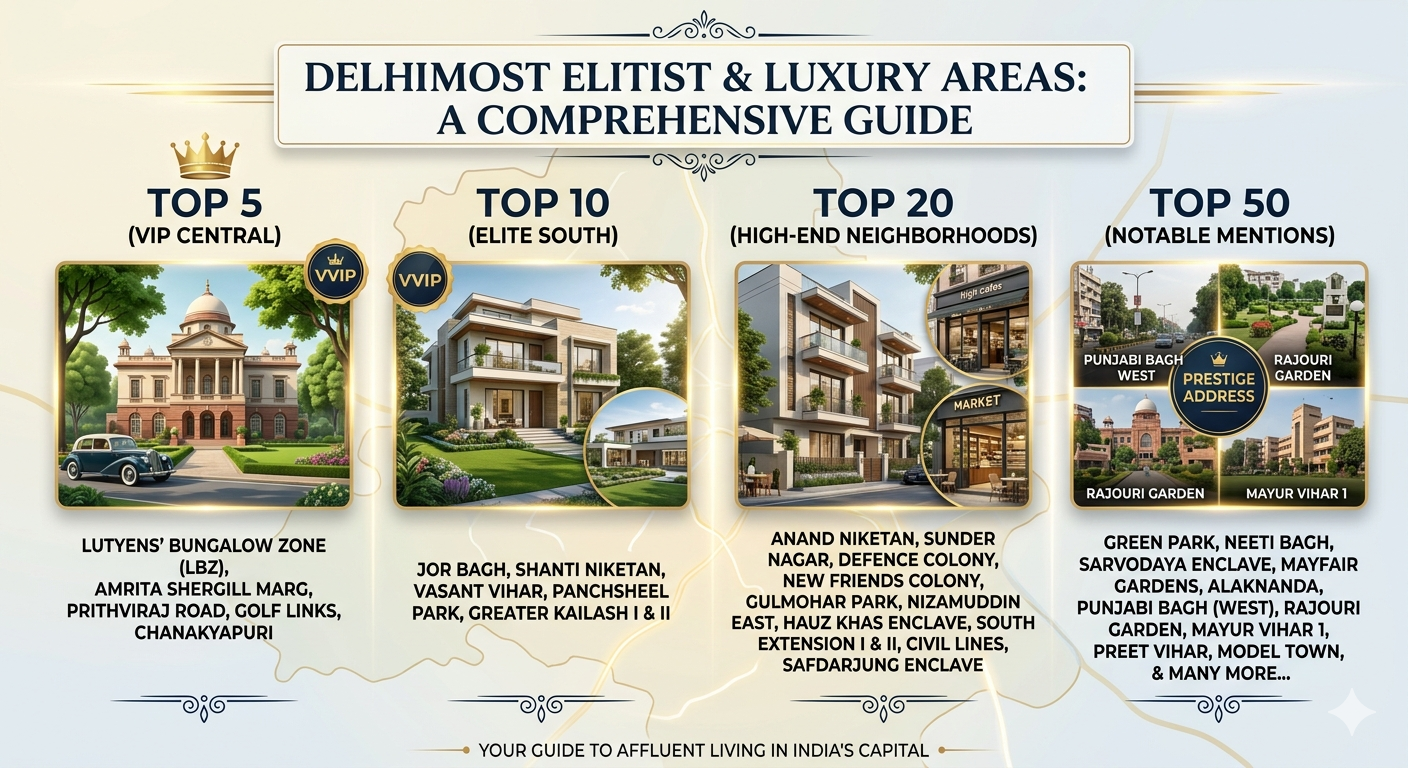
Which is the vip area in Delhi Top 5, 10, 20, 50 Posh areas in Delhi : In Delhi, VIP zones are mostly found in the heart of the city, where several politicians, bureaucrats and billionaires reside within high-security bungalows under a limited-access zone called Lutyens’ Bungalow Zone (LBZ) Some top VIP/posh localities remain Prithviraj Road, Jor Bagh, Shanti Niketan, Vasant Vihar and Golf Links. These neighborhoods provide rare luxury, verdant surroundings and closeness to government buildings.
Most Popular and VIP Areas of Delhi:
Lutyens’ area: The next most exclusive zone, where you will find the PM, ministers and top industrialists. Some main roads here are Prithviraj Road, Aurangzeb Road (now APJ Abdul Kalam Road), and Amrita Shergill Marg.
Jor Bagh: A upscale residential colony with elite legacy population, including lawyers and ex-ministers, highly connected but very secure
Shanti Niketan: Once exclusively for civil servants, it has evolved into one of Delhis wealthiest areas, attracting both industrialists and expats.
Golf Links — You can own the most expensive service in a prime area, including Delhi Golf Club and very close to raw land.
Chanakyapuri: The diplomat hub of Delhi, where foreign embassies and high commissions and luxurious government housing reside.
Vasant Vihar: An upscale section of South Delhi, home to ambassadors and wealthy residents, with wide roads and shopping centers.
Panchsheel Park: A luxury villa locality with an upscale, safe neighborhood in South Delhi
Civil Lines: This former British administrative area in North Delhi is marked by wide avenues and colonial-style bungalows, and serves as the residence of the Chief Minister of Delhi.
Delhi VIP Areas: Key Attributes
Highly Restricted: Constantly monitored and restricted access (LBZ).
Elite Neighborhood: Politicians, celebrities or top business tycoons often are neighbors
Greenery and Space, These areas are characterized by wide roads, a lot of greenery and huge living spaces.
Expensive Property: Properties in these areas can fetch more than ₹500 crore.
Delhi’s residential geography is dominated by its “Lutyens’ Culture” in the center and vast, wealthy “Colonies” to the south. The most exclusive neighborhoods are frequently populated by high-ranking politicians, international business tycoons and diplomats.
Delhi cities from largest to smallest: VIP and posh areas
Top 5: The “Ultra-Elite” Circle
These are among India’s most costly regions, with large bungalows and extreme, if Unaesthetic and oblivious to aesthetics, security.
-
Lutyens’ Bungalow Zone (LBZ): The absolute peak of Indian real estate. Home to the Prime Minister, cabinet ministers, and top industrialists.
-
Amrita Shergill Marg: Often called “Billionaire’s Row,” it features some of the largest private estates in the city.
-
Prithviraj Road: Known for historic colonial-style mansions and its central location near Lodhi Gardens.
-
Golf Links: An exclusive gated enclave bordering the Delhi Golf Club; it is arguably the most private neighborhood in Central Delhi.
-
Chanakyapuri: The Diplomatic Enclave, famous for wide boulevards, embassies, and the highest concentration of greenery in the city.
Top 10: The Prestige Neighborhoods
Expanding into South Delhi, these areas attract high-net-worth individuals (HNIs) and corporate leaders.
6. Jor Bagh: A calm, upscale neighborhood near Khan Market, popular with expats and high-profile lawyers.
7. Shanti Niketan: Originally developed for government officials, it is now the preferred address for top business families.
8. Vasant Vihar: Famous for its “Diplomats’ Club” and large independent bungalows.
9. Panchsheel Park: A gated luxury layout on the Outer Ring Road known for its large plots and elite social circle.
10. Greater Kailash (GK) I & II: A blend of luxury builder floors and high-end lifestyle markets (M & N Block).
Top 20: Established Luxury
These areas offer a mix of “old money” charm and modern luxury apartments.
11. Anand Niketan: A quiet, secure neighbor to Shanti Niketan.
12. Sunder Nagar: An artistic, elite pocket overlooking the Zoological Gardens.
13. Defence Colony (“Def Col”): Famous for its lively culinary scene and premium floors.
14. New Friends Colony: Known for massive plots and a peaceful, leafy environment.
15. Gulmohar Park: A posh locality favored by journalists, lawyers, and Bollywood A-listers.
16. Nizamuddin East: A heritage-rich area with beautiful views of Humayun’s Tomb.
17. Hauz Khas Enclave: An elite residential area surrounded by parks and historical monuments.
18. South Extension (I & II): High-end residential living with access to premier luxury retail.
19. Civil Lines: The most well-known area in North Delhi, maintaining colonial-era scale.
20. Safdarjung Enclave: A well-connected South Delhi hub with luxury independent houses.
The Top 50 List (Key Notable Mentions)
While Central and South Delhi dominate, luxury is also found in West and East Delhi pockets:
| Zone | Additional Posh Localities (Ranks 21–50) |
| South Delhi | Green Park, Neeti Bagh, Sarvodaya Enclave, Hemkunt Colony, Mount Kailash, Alaknanda (Select Pockets), Jasola Vihar (Premium Gated), Saket (Press Enclave), Mayfair Gardens. |
| Central/North | Model Town (Hudson Lane area), Bengali Market, Malcha Marg, Sardar Patel Marg, Hanuman Road, Maurice Nagar. |
| West Delhi | Punjabi Bagh (West), Rajouri Garden (Select Blocks), Janakpuri (District Center vicinity), Bali Nagar. |
| East Delhi | Mayur Vihar Phase 1 (Elite Pockets), Shanti Vihar, Preet Vihar (G-Block). |
| NCR Extensions | Golf Course Road (Gurgaon), DLF Phase 5 (Gurgaon), Sector 44 (Noida). |
Summary of Property Rates (Approximate)
-
Central Delhi (LBZ/Golf Links): ₹1,00,000 – ₹1,50,000+ per sq. ft.
-
South Delhi (Vasant Vihar/GK): ₹45,000 – ₹85,000 per sq. ft.
-
North/West Delhi (Model Town/Punjabi Bagh): ₹25,000 – ₹45,000 per sq. ft.
Frequently Asked Questions
What is a builder-buyer agreement?
It is the core contract between you and the developer, setting the price, payment plan, area, specifications and possession date. Read it fully before signing.
What is an occupancy certificate and why does it matter?
It certifies a building is legally fit to occupy. Never take possession of a completed home without it, since it affects loans, utilities and resale.
What is mutation and why is it important?
Mutation updates the ownership in municipal and revenue records after a sale. Without it the property tax and records still point to the old owner, so get it done.
What credit score do I need for a home loan?
Lenders prefer a healthy score, usually in the mid-700s and above, for the best rates. A lower score can still get a loan but often at a higher rate.
Can I claim tax benefits on a home loan?
Yes, home-loan principal and interest carry deductions under the income tax rules, subject to limits and conditions. Confirm the current rules or ask a tax adviser.
What is the difference between freehold and leasehold?
Freehold gives you full, permanent ownership of the property and land; leasehold runs for a fixed term from an authority. Freehold is generally simpler to resell.
How do I check a builder's track record?
Look at delivered projects, delivery delays, the RERA record and buyer reviews. A builder with a clean, on-time record lowers your risk sharply.
What red flags should I watch for when buying?
Unclear title, missing approvals or RERA, pending dues, a builder with delays, and prices far below the market. If something feels rushed, slow down and verify.
What is the difference between capital appreciation and rental yield?
Appreciation is the rise in the property value over time; rental yield is the annual rent as a share of the price. Most Indian homes give modest yield and rely on appreciation.
How much should I keep as a buffer beyond the price?
Set aside for stamp duty, registration, GST where it applies, interiors, and a contingency. A buffer of a meaningful share above the base price is prudent.
Is a home loan pre-approval useful?
Yes, a pre-approved loan tells you your budget, speeds up booking and strengthens your negotiating position with sellers. Get it before you shortlist seriously.
How do I choose between two similar projects?
Compare the builder record, RERA status, carpet area, real amenities, connectivity and total cost, not just the headline price. Visit both before deciding.
What stamp duty and registration charges apply in Delhi?
Stamp duty and registration vary by state and are usually a few percent of the property value, with a small rebate for women buyers in many states. Confirm the current Delhi rate before you budget.
How much home loan can I get to buy in Delhi?
Most buyers get a loan for 75-90% of the value, tied to income and credit score. Our home loan by salary guide shows the ranges.
What documents do I need to buy property in Delhi?
Identity and address proof, PAN, income papers for a loan, and the property title chain, approvals and latest tax receipts. Keep both sides KYC ready for registration.
How do I check if a project is RERA-registered?
Search the state RERA portal by project or builder name for the registration number and approved plan. Our RERA check guide explains it.