Plots in Gurgaon: Prices, Types and How to Avoid Traps

Plots are how the oldest money in Gurgaon was made. Buy land, wait, watch the city grow toward it, sell or build. It still works, but the plot market is also where the sharpest traps sit, because a cheap plot on Google Maps can be farmland with no permission to build, no loan, and no clean title. The searches run the full range: plots in Gurgaon under 10, 20, 50 lakh, under 1 or 2 crore, on the Dwarka Expressway. This guide shows what is real at each price, and how to avoid buying a problem.
The types of plots you will be shown
| Type | What it is | Indicative price |
|---|---|---|
| Licensed/HUDA plotted colonies | Approved residential plots, clean title, loanable | ₹1 crore to ₹5 crore+ |
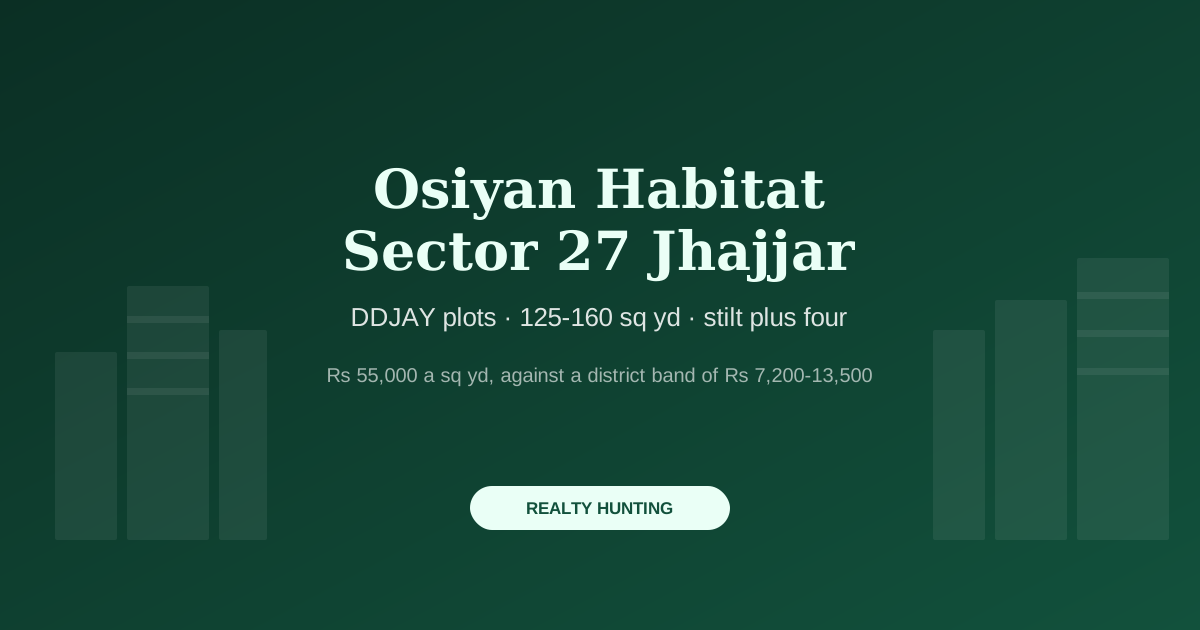
| DDJAY / affordable plotted | Government-scheme plots in newer sectors and Sohna | ₹25 lakh to ₹1 crore |
| Builder plotted projects | Developer plots on the expressway and New Gurgaon | ₹80 lakh to ₹3 crore |
| Agricultural / farm plots | Farmland sold as "plots", often no build permission | ₹10 lakh to ₹50 lakh |
The under-10 and under-20-lakh searches almost always land in that last row, agricultural or unapproved land. Some of it appreciates; much of it cannot be built on or loaned against and carries title risk. The rule is simple: the cheaper the plot, the harder you check the paper.
Where plots make sense in Gurgaon
- Dwarka Expressway sectors: licensed plotted colonies and builder plots riding the corridor's growth, covered in our Dwarka Expressway guide.
- New Gurgaon (Sectors 79-95): approved plotted development with improving connectivity.
- Sohna and South Gurgaon: cheaper entry, DDJAY plotted colonies, and land betting on the upgraded Sohna Expressway.
- Old sectors and DLF: premium residential plots with mature neighbourhoods, high prices, low risk.
- SPR and Golf Course Extension belt: scarce, high-value plots near the luxury corridor.
For a first-time plot buyer, a licensed plotted colony or a DDJAY plot with clean approval beats a cheap agricultural parcel every time. The whole appeal of a plot is that the land is a clean, appreciating asset, and that only holds if the title is clean.
Plot versus flat: the real trade
A plot gives you the highest appreciation potential, because land is the scarce ingredient, and total flexibility to build when you choose. Against that, a plot earns no rent while you hold, needs guarding against encroachment, and is harder to finance, banks lend less readily and at lower loan-to-value on land than on flats. A flat earns rent from day one and is easy to finance, but its structure depreciates while only the land share appreciates. For patient investors with capital, plots win on returns; for those who need income or easy loans, flats are simpler. Our NCR investment guide compares both across corridors.
Build now or hold: two plot strategies
Plot buyers split into two camps, and knowing which one you are shapes what and where you buy. The hold-and-flip investor buys an approved plot in a growth corridor, sits on it for five to ten years while infrastructure arrives, and sells the land itself without ever building. This suits corridors like the Dwarka Expressway and Sohna, where the land story is still playing out. The build-and-use owner buys a plot to construct a home or a rental floor, so location convenience, plot dimensions, and permitted floors matter more than raw appreciation. A narrow or awkwardly shaped plot that a flipper might accept for the price can be a poor build. Decide your camp before you shortlist, because the best plot for holding is rarely the best plot for building.
The checks that protect you
- Approval and land use. Confirm the plot is in a licensed, residential-approved colony, not agricultural land sold as plots. Ask for the licence and layout approval.
- Clean title and mutation. Verify the ownership chain and revenue records; our land records guide shows how.
- Loan test. If a bank will fund the plot, its lawyer has effectively checked the title for you. If none will, treat that as a warning.
- Physical demarcation. Walk the boundary with the layout map and, ideally, a surveyor. Confirm the approach road exists and is not someone else's land.
- Encroachment and acquisition. Check for occupants and any government acquisition or Master Plan reservation on the land.
Frequently asked questions
Can I buy a plot in Gurgaon under 20 lakh?
At that price you are mostly looking at agricultural or unapproved land sold as plots, which often cannot be built on or loaned against. Verify approval and title very carefully before buying.
Which areas have the best plots in Gurgaon?
Licensed plotted colonies on the Dwarka Expressway and in New Gurgaon, DDJAY plots in Sohna and newer sectors, and premium plots in the old DLF and SPR belt.
Is a plot a better investment than a flat?
For long-term appreciation, yes, because you own scarce land. But plots earn no rent, need guarding, and are harder to finance. Flats give income and easy loans.
Can I get a loan to buy a plot in Gurgaon?
Yes, on approved plots in licensed colonies, though banks lend at lower loan-to-value than for flats. Unapproved or agricultural land is usually not financeable.
What is a DDJAY plot?
A plot under Haryana's Deen Dayal Jan Awas Yojana affordable plotted-colony scheme, offering approved smaller plots at lower prices in newer sectors and Sohna.
What is the biggest risk in buying a plot?
Title and approval, not price. Agricultural land sold as plots, unclear ownership chains, and land under acquisition cause the biggest losses. Verify records before the token.
A Gurgaon plot can be the best-returning thing you ever buy, or a cheap trap that never becomes a home. Buy approved, licensed land with a clean title, use the bank's willingness to lend as your paper test, and walk the boundary yourself. Explore plot options in our residential plots section and read more on the blog.