Fastag Annual pass applicable on Delhi Mumbai Expressway
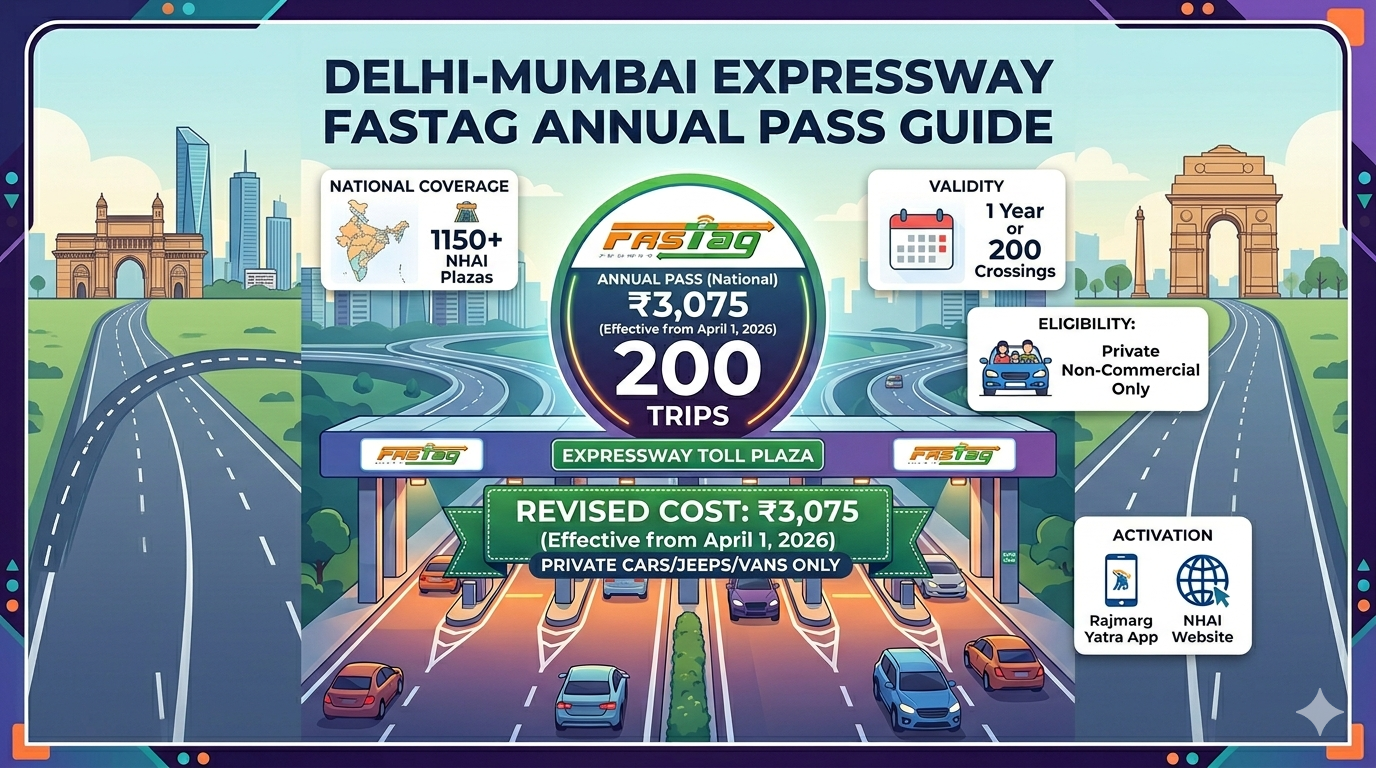
Fastag Annual pass applicable on Delhi Mumbai Expressway : Yes NHAI FASTag Annual Pass is valid on the Delhi-Mumbai Expressway Officially speaking the NHAI FASTag Annual Pass is applicable on the Delhi-Mumbai Expressway officially known as a National Expressway (NE) which is managed by National Highways Authority of India. The private car pass costs ₹3,000 and includes 200 one-way trips in a year with closed-loop tolling that charges according to entry/exit points.
How Long Is It Valid For: 1 year or 200 toll transactions (whichever occurs first).
Where it works: All NHAI-operated plazas like Delhi-Mumbai, Delhi-Meerut and Eastern Peripheral Expressways.
Exclusions: Valid in NOT state highway (mumbai-pune expressway, samruddhi mahamarg, yamuna expressway)
Purchase:Through the Rajmarg Yatra App or the official IHMCL website.
Option B: In case the 200 trip limit is crossed or after passing its validity period, it will automatically switch to standard pay per use FASTag framework.
Q Fastag annual pass applicable on delhi mumbai expressway
The answer is, yes the FASTag National Annual Pass is fully valid on the Delhi-Mumbai Expressway.
The Delhi-Mumbai Expressway, as a National Expressway (NE-4) under NHAI, is included in the national pass scheme.
Based on which this is what Delhi-Mumbai Expressway will look like
Trip Calculation: While in the case of point-based tolls (where you pay a fixed fee at a counter), the Delhi-Mumbai Expressway applies “Closed Tolling System”. By the rules of annual pass, One entry and one exit on this expressway counts as a single trip of your 200trips in total for the year.
Lower Charges – A standard Sohna to Dausa trip costs ₹450–₹500 even with 50% toll concession (valid until 2026 for unfinished stretches) Thanks to the Annual Pass, that same trip actually only costs you ₹15.37 with a maximum of 200 trips to factor in additional utility.
Quick Pass Overview (Updated April 2026)
| Feature | Details |
| Annual Fee | ₹3,075 (Revised April 1, 2026) |
| Trip Limit | 200 crossings within 1 year |
| Validity | 1 year or 200 trips, whichever is earlier |
| Eligible Vehicles | Private, non-commercial Cars/Jeeps/Vans only |
| Application | Activated via Rajmarg Yatra App or NHAI portal |
Important Limitations
Commercial Use Restriction: All taxis/yellow plate vehicles, Registered vehicle as commercial cannot take advantage of this pass. During the time of activation, the system checks it automatically through the VAHAN database.
State Roads: It will not work on state-managed connecting roads (like the Sohna Elevated Corridor if separate state tolls apply) and cannot hold for other private expressways like the Yamuna Expressway while it works to build the Delhi-Mumbai Expressway. For those, a regular toll will be deducted from your normal FASTag wallet balance.
It is Non-Transferrable: Your pass will be locked against your Vehicle Registration Number (VRN), and cannot be used in any other vehicle.
Pro-Tip: If you make the Gurgaon/Delhi, Jaipur/Dausa circuit more than a couple of times (7-8 or more) in a year, then the ₹3,075 pass will break-even from having made it cost-effective for just 4 to 5 round trips.
Related Items: FAQ for FASTag National Annual Pass (2026)
Most asked questions about ₹3,075 yearly pass and its implication on Dwarka, Delhi-Mumbai Expressways
Can I use the same annual pass for Dwarka Expressway and Delhi-Mumbai Expressway?
Yes. This is a National Pass. As opposed to local monthly passes issued with a particular toll plaza, this pass has application for all NHAI managed plazas in the country such as Bijwasan (Dwarka Expressway) and all entry/exit points on the Delhi-Mumbai Expressway.
Does a round trip count as one or two trips? It counts as two trips. Every time you leave a “closed” system with say the Delhi- Mumbai Expressway or pass through a toll gantry, one trip is deducted from your 200-trip annual limit.
Q, What if I complete my 200 trips before the year ends?
At 200 crossings the pass expires. The FASTag will go back into normal wallet mode and hence, the full toll amount would be levied on your prepaid balance (for further journeys until you buy a new pass).
Is it possible for me to purchase this pass for my commercial taxi or office fleet?
No. The ₹3,075 yearly pass is strictly available only for Class 4 (private, non-commercial) vehicles as per the NHAI. Commercial vehicles pay standard per trip commercial rates or specific monthly passes at a higher price point.
When will my trips run out? You can also monitor your unused trips through:
In the “Monthly/Annual Pass” module, Rajmarg Yatra App your payments are processed through Uttarakhand.
And SMS Alerts: NHAI usually send a message once after crossing with a balance/trips left.
Bank FASTag Portal:- You can log into your respective FASTag issuing bank website.
Do you know if the pass would cover Yamuna Expressway (Noida-Agra) too?
No. The NHAI does not manage the Yamuna Expressway, and that is the reason. Note that the National Annual Pass is valid only for NHAI-managed toll plazas. However, you will still need to maintain an adequate amount in your FASTag wallet for clearing toll payment there.
Is it better to take an Annual Pass, or a Local Pass if I stay around the Dwarka Expressway? It depends on your usage:
Local Resident Pass – (₹340/month): Best suited if you stay within 20km and cross the plaza every day(unlimited crossings).
National Yearly Pass (₹3,075/year): Ideal for long distance travellers—An ideal choice if you have to travel a lot to places like Jaipur, Chandigarh or Mumbai or if it crosses the local plaza less than 15–20 occasions in a month.
Will I need to affix a new FASTag sticker to activate the pass?
No. The pass is a digital entitlement and is linked to your existing tag. After payment through Rajmarg Yatra App or NHAI portal, the system identifies your vehicle number in the toll lane and deducts a “trip” rather than money.
Tip 2:- Please keep a minimum of ₹150–₹200 balance on your main FASTag wallet irrespective of having an active pass. Certain platforms may only be able to “open” the barrier with a specific threshold of minimum resources.
Frequently Asked Questions
Can I negotiate the price in Delhi?
Resale and ready inventory are usually negotiable, while fresh launches have fixed rates but may waive some charges. Compare recent deals nearby to judge a fair price.
What is the difference between carpet area and super area?
Carpet area is the usable space inside your walls; super area adds a share of common areas. Always confirm the carpet area you actually get before comparing prices.
What extra costs come beyond the price in Delhi?
Budget for stamp duty and registration, GST on under-construction homes, parking, club and maintenance deposits, and loan fees. Ask for a full cost sheet upfront.
How does Realty Hunting help me buy in Delhi?
We share verified listings, honest area advice and the real paperwork picture, and connect you with builders and sellers. Reach out and we will shortlist options that fit your budget.
Should I buy ready-to-move or under-construction in Delhi?
Ready homes have no wait, no GST and no build risk but cost more; under-construction is cheaper with a longer wait. Choose by your timeline and risk appetite.
How do I book a property in Delhi?
Shortlist, visit, check the papers and RERA, then pay the booking amount and sign the agreement. Read the payment plan and cancellation terms before you commit.
Do I need a lawyer to buy property in Delhi?
For anything beyond a simple, clean deal it helps. A lawyer vets the title, the agreement and the approvals, which is cheap insurance against a costly mistake.
What is a builder-buyer agreement?
It is the core contract between you and the developer, setting the price, payment plan, area, specifications and possession date. Read it fully before signing.
What is an occupancy certificate and why does it matter?
It certifies a building is legally fit to occupy. Never take possession of a completed home without it, since it affects loans, utilities and resale.
What is mutation and why is it important?
Mutation updates the ownership in municipal and revenue records after a sale. Without it the property tax and records still point to the old owner, so get it done.
What credit score do I need for a home loan?
Lenders prefer a healthy score, usually in the mid-700s and above, for the best rates. A lower score can still get a loan but often at a higher rate.
Can I claim tax benefits on a home loan?
Yes, home-loan principal and interest carry deductions under the income tax rules, subject to limits and conditions. Confirm the current rules or ask a tax adviser.
What is the difference between freehold and leasehold?
Freehold gives you full, permanent ownership of the property and land; leasehold runs for a fixed term from an authority. Freehold is generally simpler to resell.
How do I check a builder's track record?
Look at delivered projects, delivery delays, the RERA record and buyer reviews. A builder with a clean, on-time record lowers your risk sharply.
What red flags should I watch for when buying?
Unclear title, missing approvals or RERA, pending dues, a builder with delays, and prices far below the market. If something feels rushed, slow down and verify.
What is the difference between capital appreciation and rental yield?
Appreciation is the rise in the property value over time; rental yield is the annual rent as a share of the price. Most Indian homes give modest yield and rely on appreciation.