Embassy Developments' FY26 Pre-Sales Jump 128% to ₹4,631 Crore — Inside the Turnaround
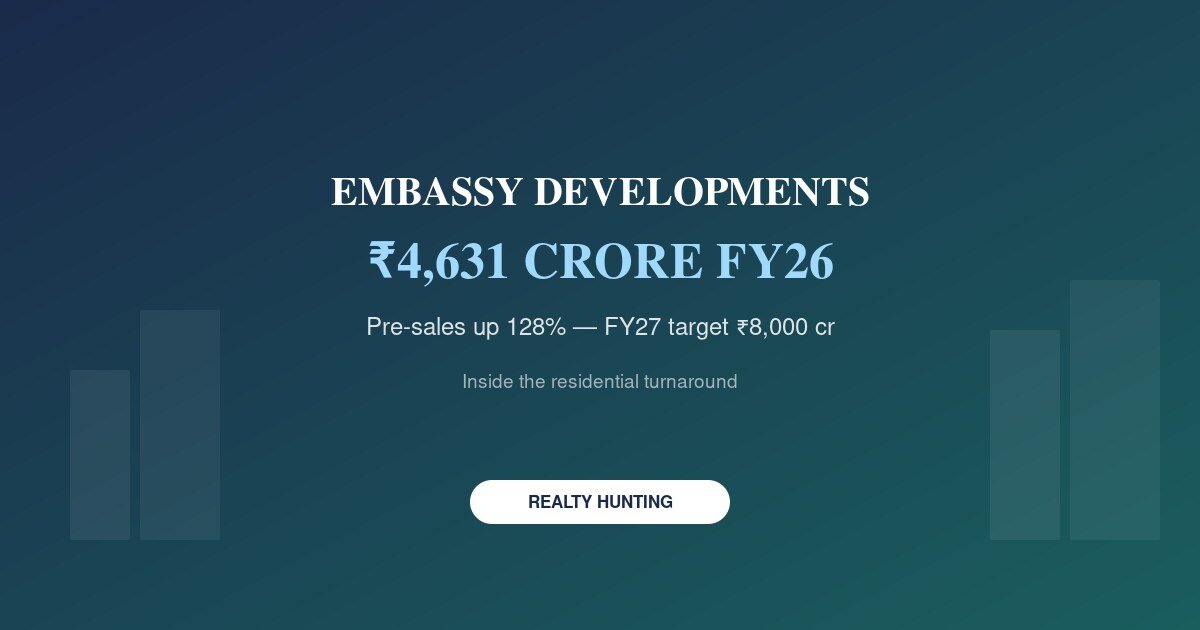
Embassy Developments, the residential arm connected to the Embassy Group that also backs India's largest office REIT, has posted its best-ever pre-sales year — ₹4,631 crore in FY26, up 128% from FY25. Managing Director Aditya Virwani is now guiding for ₹8,000 crore in FY27, nearly double again, backed by a ₹19,500 crore launch pipeline spread across Bengaluru, the Mumbai Metropolitan Region and Delhi-NCR.
For a company built primarily on its commercial office pedigree, this residential pivot's scale and speed are worth understanding — both for what it signals about housing demand in these cities and for what it means if you're evaluating an Embassy residential project.
At a Glance
| Metric | Figure |
|---|---|
| FY26 pre-sales | ₹4,631 crore |
| FY25 pre-sales (for comparison) | ~₹2,030 crore (implied by 128% growth) |
| YoY growth | +128% |
| FY27 pre-sales target | ₹8,000 crore |
| FY27 planned launch pipeline | ₹19,500 crore |
| FY27 construction investment | ₹2,000 crore |
| Key markets | Bengaluru, Mumbai Metropolitan Region (MMR), Delhi-NCR |
Key Takeaways
- Embassy Developments' FY26 pre-sales bookings more than doubled to ₹4,631 crore.
- FY27 target is ₹8,000 crore, nearly double FY26, backed by an aggressive ₹19,500 crore launch pipeline.
- The company plans to invest ₹2,000 crore in construction activities in FY27 — its biggest construction year yet.
- Growth is spread across three markets: Bengaluru (home turf), MMR and Delhi-NCR (newer expansion territory).
- This mirrors a broader trend of established commercial-real-estate players entering the residential race aggressively in 2026.
From Office Legacy to Residential Scale
Embassy's brand recognition has historically come from commercial office parks — the same portfolio underlying Embassy Office Parks REIT, India's largest listed office REIT. Embassy Developments represents the residential push, and FY26's numbers suggest that push is now working at real scale rather than as a side project. Doubling pre-sales in a single year, in a market where many residential-only developers are seeing much more modest growth, points to the company successfully leveraging its brand trust and land bank from the commercial side into residential credibility.
Where the Growth Is Coming From
The FY27 growth plan spans three distinct markets, each with a different role. Bengaluru remains the company's home base, where its brand recognition is strongest and land holdings are deepest — expect the bulk of near-term launches to anchor here. The Mumbai Metropolitan Region represents a higher-ticket, higher-margin opportunity given Mumbai's land scarcity and pricing power, though execution risk is generally higher in MMR due to approval timelines. Delhi-NCR is the newer frontier — a market where Embassy doesn't have the decades of on-ground relationships that established NCR players like DLF or M3M do, making this the segment most worth watching for whether the FY27 target is realistic.
The ₹2,000 Crore Construction Bet
Committing ₹2,000 crore to construction activity in FY27 — described by the company as its biggest construction year yet — signals confidence that current pre-sales momentum will convert into deliverable projects rather than stalling at the booking stage. This matters to buyers specifically: a developer that's genuinely spending on construction, not just marketing launches, is a stronger signal of delivery capability than sales numbers alone.
Why This Matters Beyond One Company
Embassy's residential turnaround is part of a broader pattern in 2026: developers with strong commercial real estate pedigree and REIT-linked brand trust are increasingly competing directly with traditional residential-first developers like DLF, Godrej Properties and Prestige Estates. This raises the competitive bar across Bengaluru, MMR and NCR alike — buyers get more credible options, but established residential players will need to defend market share more actively against well-capitalized commercial-side entrants.
How Embassy Compares to Other Turnaround Developers
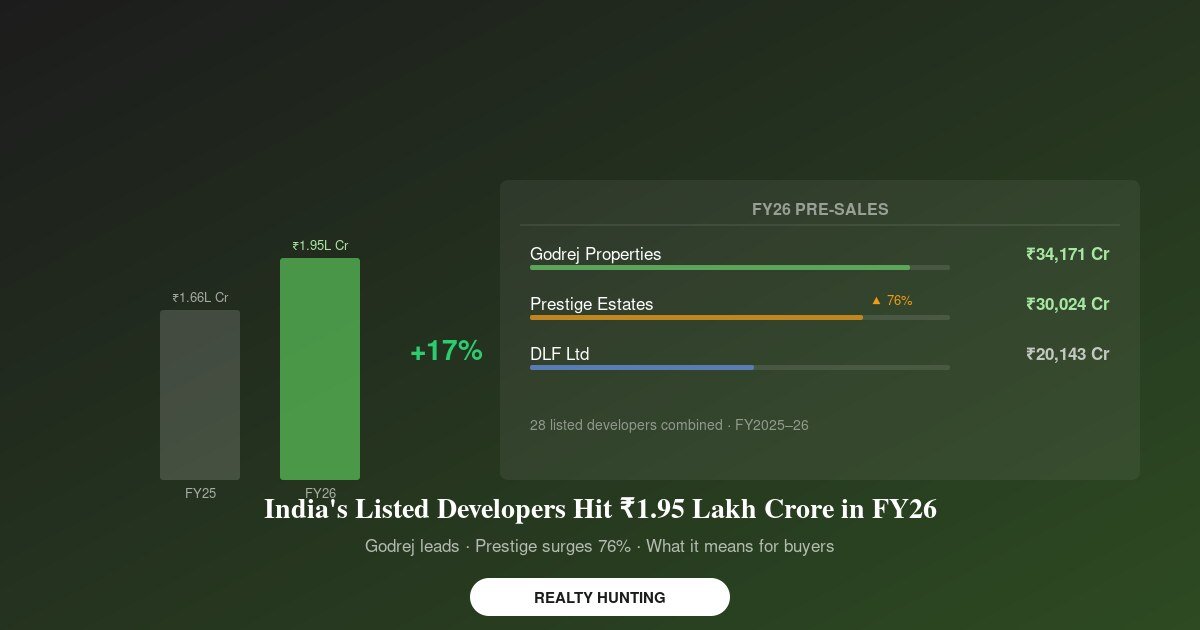
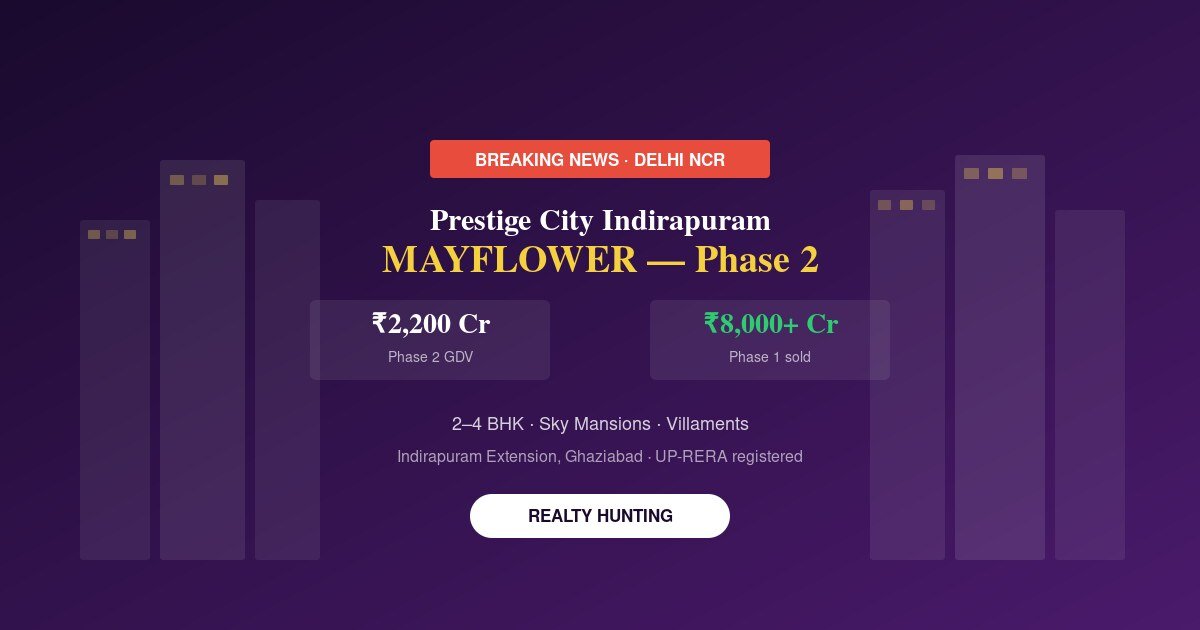
Embassy's residential pivot invites a natural comparison to Prestige Estates' NCR expansion, another case of an established developer breaking into new geography aggressively. Prestige's FY26 pre-sales surged 76% to ₹30,024 crore largely on the back of a single project — The Prestige City in Indirapuram — selling over ₹8,000 crore from roughly ₹11,000 crore of inventory in Phase 1 alone. Embassy's 128% jump is proportionally even sharper, but off a smaller base (₹4,631 crore versus Prestige's much larger absolute scale), which is an important distinction: percentage growth looks similar in headlines, but Prestige is already operating at 6x Embassy Developments' pre-sales volume. Where the two genuinely differ is geographic strategy — Prestige bet heavily on one flagship NCR project, while Embassy's FY27 plan spreads ₹19,500 crore of launches across three separate markets, a more diversified but also more execution-heavy approach.
Reading the Numbers With Some Skepticism
It's worth asking what "FY25 base" actually looked like before assuming the 128% jump is purely organic growth. A near-2.5x increase over one year is unusual even in a strong housing market, and part of the explanation is likely that FY25 itself was a rebuilding year following Embassy Developments' formation and early residential portfolio assembly — meaning the growth rate, while genuine, partly reflects a low starting point rather than pure demand acceleration that would repeat indefinitely. This doesn't diminish the achievement, but it does suggest FY27's ₹8,000 crore target (a further ~73% jump) is a more demanding, organic-growth test than FY26's number was.
Our Honest View
A 128% jump in one year is an exceptional number, and it's worth asking whether it's sustainable or a low-base effect — FY25's pre-sales base was comparatively modest, which mathematically makes a large percentage jump easier to achieve. The FY27 target of ₹8,000 crore is a more meaningful test: it requires nearly doubling again from an already-elevated base, and it depends on successfully breaking into Delhi-NCR, a market with entrenched competition. The ₹2,000 crore construction commitment is a genuinely reassuring signal for existing and prospective buyers, since it shows capital is being deployed into delivery, not just sales campaigns.
Who Should Pay Attention
Prospective buyers in Bengaluru, MMR or NCR evaluating an Embassy residential project get a reasonably strong signal here — the company is investing in construction at scale, not just booking sales and hoping capital follows. Investors tracking Embassy's REIT alongside its residential arm should note these are related but distinct entities; strong residential pre-sales don't directly move REIT distributions, which come from commercial leasing income. Competing developers in NCR specifically should watch how quickly Embassy's launches there gain traction, since it's the newest and least-proven market in this expansion plan.
FAQ
Is Embassy Developments the same as Embassy Office Parks REIT? No — they're related through the broader Embassy Group but are distinct entities. Embassy Developments is the residential/development arm; Embassy Office Parks REIT is the listed commercial office REIT with its own separate financials and distributions.
What's driving Embassy Developments' FY26 growth? Strong demand across its core Bengaluru market plus early traction in MMR and Delhi-NCR, aided by brand trust carried over from its commercial real estate reputation.
Is the ₹8,000 crore FY27 target realistic? It's ambitious — nearly double FY26's already-strong number — and depends heavily on successful execution in Delhi-NCR, where the company has less of a track record than in Bengaluru.
Does this news affect Embassy REIT unit holders? Not directly — REIT distributions come from commercial leasing income, not residential pre-sales, though strong group-level momentum can support overall brand and execution confidence.
Which cities should buyers watch for new Embassy residential launches? Bengaluru (core market), Mumbai Metropolitan Region, and Delhi-NCR — the ₹19,500 crore FY27 launch pipeline spans all three.
How does Embassy's growth compare to Prestige Estates' NCR expansion? Both are established developers breaking into new geography aggressively, but Prestige is already operating at roughly 6x Embassy Developments' pre-sales volume — Embassy's percentage growth is sharper, but off a much smaller base.
Is a 128% jump in one year sustainable? Not indefinitely — part of it reflects FY25 being a comparatively low base as Embassy Developments' residential portfolio was still being assembled. The FY27 target of ₹8,000 crore is a more demanding test of organic, repeatable growth.
Curious how an Embassy Developments launch compares to other options in your target city? Browse new-launch projects on Realty Hunting or reach out — we track project-level RERA and delivery data before we recommend anything.