EDC and IDC Charges in Real Estate: What Homebuyers Need to Know
EDC and IDC Charges in Real Estate: What Homebuyers Need to Know
If you’re planning to purchase an apartment, particularly within a development that is in the process of being built, you’ll come across various fees and terms that add to the price. Of these, EDC (External Development Charges) and IDC (Infrastructure Development Charges) are often spoken of. Though they could appear to be the same set of terms but understanding the meaning of them is essential for anyone who is considering buying a home. The charges go beyond simply fees. They are the way that government officials ensure that the expansion of real estate investment is supported with the infrastructure needed to help it.
Let’s take a look at the what EDC and IDC costs are, the reason they’re there, and how they affect your purchase of a home.
The Foundation: Why Developers Pay These Charges
Real estate development doesn’t only concerned with building structures; it’s about building communities. When new commercial and residential development projects are built and take over the area, they put a greater strain for public services and infrastructure. Imagine a township that is populated by hundreds of people – they’ll require roads for their commutes and drink water and electricity to run their homes and a system for managing garbage.
That’s the point at which EDC and IDC become relevant. Local authorities and the state government apply these fees to developers in order to finance the construction and maintenance of this vital infrastructure. Developers are the ones who contribute money to these fund which can be transferred to buyers as a part of the home’s price.
Unpacking EDC: External Development Charges
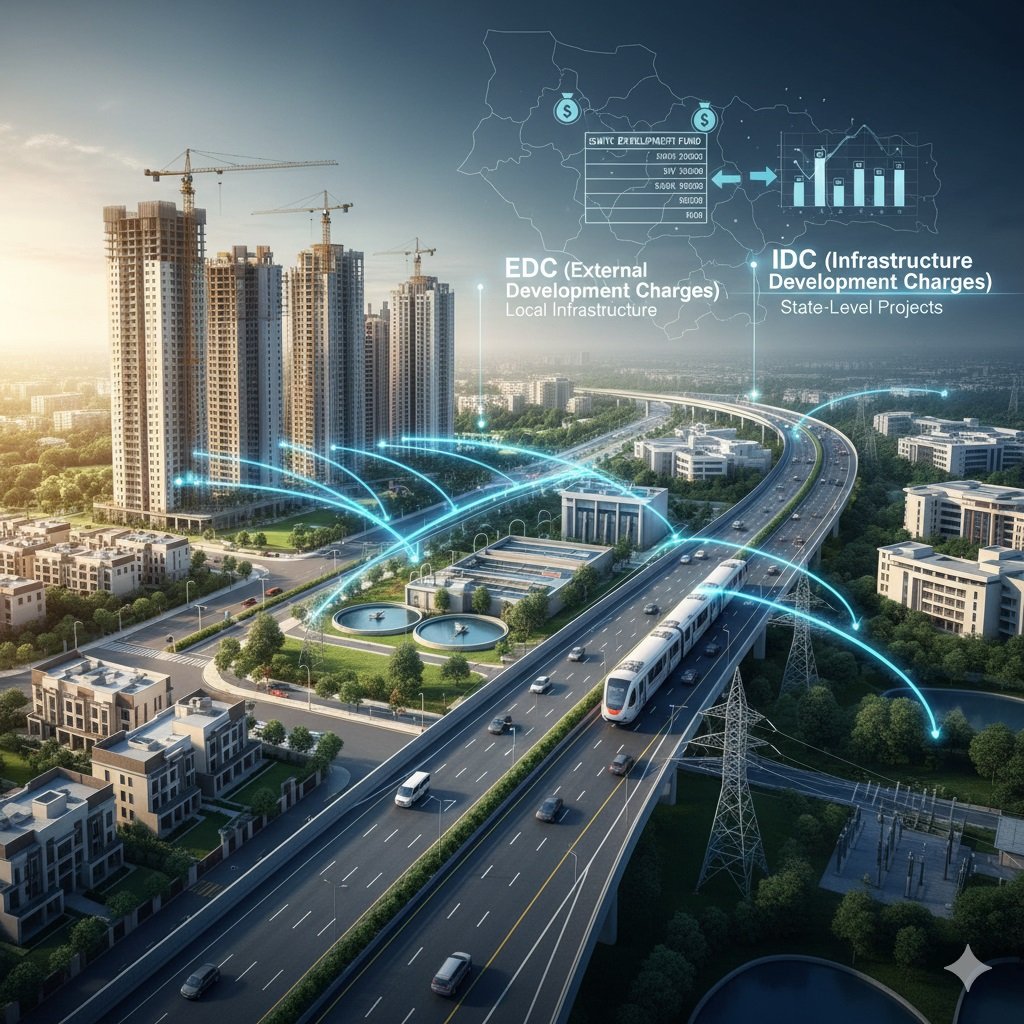
What does it mean: EDC refers to the fees that municipal or state government development agencies from developers of real estate. The funds are intended for infrastructure development that is in the outside of the boundaries of an individual real estate development.
What does it cover: Think of all the facilities and services that can make your locality more accessible, yet aren’t included in your apartment complex and gated communities. EDC money is used to:
-
Large Road Networks: Construction and maintenance of major roads, highways and flyovers connecting your neighborhood to the larger city.
-
water Supply Systems: Laying of main pipelines, building of water treatment facilities as well as ensuring a sufficient supplies of water to the surrounding area.
-
Sewerage and drainage Construction of sturdy wastewater treatment plants as well as stormwater drainage systems in order to avoid waterlogging and to ensure proper disposal of waste.
-
Electrical Infrastructure Installing substations, power grids and main electric power lines to satisfy the energy needs of the latest developments.
-
Solid Waste Management: Facilities and systems to collect and disposal of waste.
-
The Public Utilities: Sometimes, this could include creation of parks for the public green belts, parks, and other facilities that are community-based.
Scope: The principal objective for EDC is to make sure that, as new developments are put in, the area is able to accommodate the growing number of people and the demand for goods and services. It’s an instrument for efficient urban planning and preventing small areas of development that aren’t equipped with all the amenities that are required by public authorities.
Understanding IDC: Infrastructure Development Charges
What does it mean: IDC are charges that the state government collects from developers to fund bigger, larger infrastructure projects, which benefit a whole region or entire state, not only the immediate area of one particular project.
What is it: While EDC focuses on the local infrastructure of external, IDC contributes to broader regional, regional growth. This could include:
-
Major transportation projects Finance for big-scale projects including metro rail systems regional expressways, regional expressways and state highways to increase connectivity across large geographical regions.
-
Massive-scale Water and Power Projects: Construction of massive dams or reservoirs, energy generation plant or transmission lines which serve several cities or areas.
-
Social Infrastructure Contribution to the creation of hospitals that are large, public schools, or other major educational centers that serve an ever-growing population.
-
Economic Corridors In the development of economic corridors, industrial zones or other areas specifically designed to stimulate the overall growth of the economy in a state.
The purpose of HTML0 is IDC is aiming to set up an official state-level development fund. The fund will be strategically employed to support socio-economic growth as well as for the construction of vital infrastructure to support the expansion and growth of the state. It also ensures the development of a balanced region.
EDC Vs. IDC: A Quick comparison
Below is a table that summarizes the major distinctions among these two significant charges:
|
Feature |
EDC (External Development Charges) |
IDC (Infrastructure Development Charges) |
|
Scope of Work |
External and local infrastructure |
Regional, large-scale, or the state level infrastructure |
|
Area of Benefit |
A particular locality, or a group of initiatives |
A state in its entirety or a large urban region |
|
Fund Utilization |
Utilized for the profit of the project’s peripherals |
The credit is credited to a state development fund that funds large projects |
|
Who Pays |
Developers are passed along to the buyer of a home. |
Developers are passed along to the buyer of a home. |
|
Calculation |
Most often, the price is based on the areas of the plot (e.g. per acres) and the kind of construction |
Can be a per-square-meter/foot charge based on the project’s covered area |
Why Are These Charges Important to You, The Homebuyer?
-
Transparency of Pricing If you are buying a home the charges will be an essential part that make up what is known as the “other charges” section in the payment plan. They help you understand an accurate breakdown of the price.
-
impact on property value: The presence of high-quality infrastructure at the state level and outside (funded via EDC or IDC) will directly increase the quality of life and potential appreciation of your home. The availability of reliable roads with reliable utility services as well as a high level of connectivity makes an area more appealing.
-
Informed Decision Making Being aware of the costs they will help you understand the larger view of urban development as well as what you’ll get for your investment that goes beyond wall of your home.
-
Compliance with Regulatory Regulations: In a number of regions (like as under RERA for instance in India) developers must disclose the charges to prospective homebuyers in a clear manner to ensure fairness and accountability.
Conclusion
EDC along with IDC charges are crucial to the growth plans of cities and states. They’re a joint initiative to create and maintain the infrastructure essential to support growth and increases the standard of living for every resident. If you are a homeowner, knowing the charges will not only shed an understanding of your property’s costs but also offers information about the plan and future of the location you select to reside in. Be sure to ask your builder for an exact list of all costs which include EDC and IDC for an informed decision and make a confident purchase.