Best area in delhi for living for students
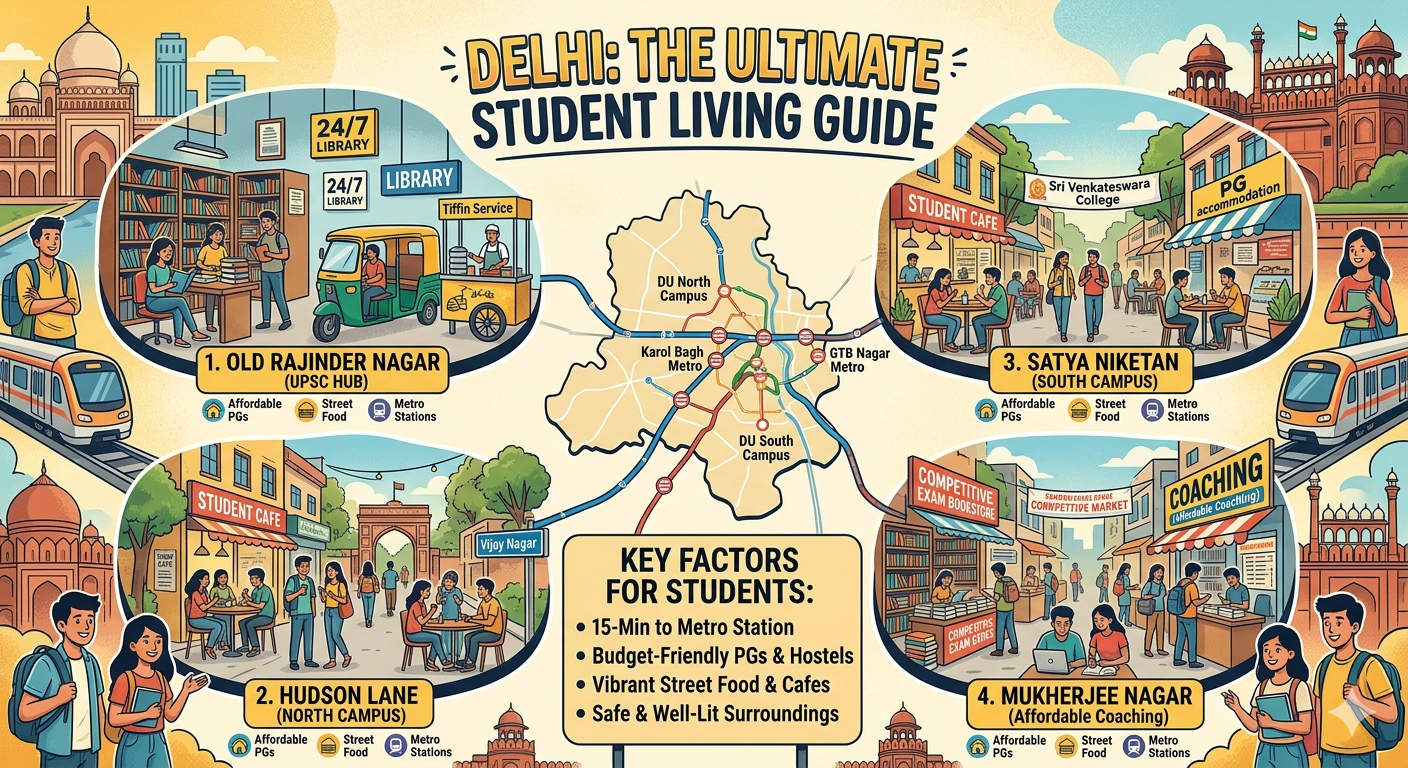
Best area in delhi for living for students : Your university or coaching hub can make the best area in Delhi for students, but GTB Nagar/Hudson Lane (North Campus), Laxmi Nagar (CA/UPSC prep), and Satya Niketan (South Campus) are top places to stay under PGs/shared flat budgets ₹8,000–₹20,000 per month.
Which option is best for you depends on your needs:
North Campus (Delhi University)
GTB Nagar & Hudson Lane: NORTH CAMPUS STUDENT HEAVEN Dotted with a number of cafes, economical PGS, private libraries and terrific Metro connectivity (Yellow Line).
Kamla Nagar: A bit more upscale yet more residential area, combining college life, shopping and very close to the campus colleges.
South Campus (Delhi University)
Satya Niketan- Right opposite Sri Venkateswara College. Known for budget gorging joints, cafes and wide PG accommodation facilities it is famously student-friendly.
Malviya Nagar & Ber Sarai: All time favourite amongst DU South Campus students & also people preparing for competitive exams. Not very green, peaceful and well connected.
Coaching Hubs (UPSC, CA, CS, SSC)
Mukherjee Nagar: The hub for UPSC and SSC aspirants It is a student hub, albeit very dense, with bookstores and photocopy shops hemmed next to study coaching centers on either side of the street.
Old Rajinder Nagar: Yet another hub for aspirants, this time of Civil Services in Central Delhi.
Laxmi Nagar: It is the CA and CS student base for east Delhi coaching area. It is really cheap; there are infinite tiffin services and shared apartments.
Tips for House Hunting:
Budget: Depending on how in demand a place is, you may have to rent a single or pop into a PG room, which could cost about ₹8,000 (if it is far outside of the city) to ~₹15,000.
Platform: While there are local brokers available in every nook and corner, you can also do some ground work through platforms like Housing or NoBroker so that you have a general idea of what the prices along with amenities offered currently are.
Now, the best part of Delhi for any students is often determined by which university campus it caters to with travelling across this city; a tiring task. Most of the students nearby live in certain hubs around what are considered to be cheap housing centres and street food, as well as not being too far from a coaching centre/college.
North Campus (University Hub of Delhi)
These are the classic student-y areas, lots of PGs, hostels, and small flats if you are studying around DU’s North Campus.
Hudson Lane & Vijay Nagar: These places are jam-packed with the foodies who love for their trendy cafes and more like student-friendly food. It’s easy to get to your North Campus colleges from here, most of which are just within walking distance.
Kamla Nagar: Ideal if you are looking for food and shopping (It is the commercial hub of North Campus) however, rents here tend to be a little on the higher side.
GTB Nagar: Best for its metro connectivity (Yellow Line) and numerous coaching institutes and budget libraries
South Campus (Hub of University of Delhi)
The South Campus zones are generally slightly more high-end and park-like, though just as student-centric.
Satya Niketan: Right opposite Sri Venkateswara College, this is the ‘Kamla Nagar of south Delhi.’ It is full of budget cafes and PGs.
Lajpat Nagar: Bit further off but very well connected. It is well received among the international students and buyers searching for a builder floor to live independently.
Munirka, Rarely in press coverage, because everyone thinks, why Munika? Well Munirka is home to JNU and IIT Delhi students 4 you right 🙂 So the rents are of course also on this side. So ideal for student stays!
The “Coaching” Hubs
If you are there in Delhi for the purpose of Competitive preparation (UPSC, JEE, NEET) then these areas are made just to accommodate study lives.
Old Rajinder Nagar: The hub for UPSC aspirants. It is home to niche bookstores, all-night libraries and “tiffin” services.
Mukherjee Nagar: Though not as costly as Rajinder Nagar it’s quite similar. The cheapest student hub for SSC and other government exam preparations.
Kalu Sarai: Situated near Hauz Khas, this is the hub for all engineering ( JEE) and medical aspirants because this area houses a lot of coaching centres.
Student Living Comparison
| Area | Best For | Vibe | Metro Connectivity |
| Hudson Lane | DU North Campus | High energy, Cafe culture | GTB Nagar (Yellow Line) |
| Satya Niketan | DU South Campus | Social, Academic | Durgabai Deshmukh (Pink Line) |
| Old Rajinder Nagar | UPSC Aspirants | Serious, Library-focused | Karol Bagh (Blue Line) |
| Laxmi Nagar | CA / Competitive Exams | Highly Affordable | Laxmi Nagar (Blue Line) |
Key Tips for Students:
THE BROKER SYSTEM Most of the student housing takes place by way of ‘Brokers’/ Commonly, its 50% or one month rent commission fee which you can always negotiate for!
Metro is a Must: You have to be located in walking distance from metro stations within 10–15 minutes. It is the most reliable means to get around town.
Utilities: Ask whether rents incorporates “fixed” electricity costs and if bills is charged on the scale (sub-meter), as in summers of Delhi that could bite away a big part of your income.
Quick Reference for Student Areas
| Category | Recommended Areas | Vibe & Amenities |
| Academic Hubs | Hudson Lane (North) & Satya Niketan (South) | High energy with a massive variety of student-run cafes and fast food. |
| Serious Study | Old Rajinder Nagar & Mukherjee Nagar | Very quiet, study-focused environments with 24/7 libraries and bookstores. |
| Convenience | GTB Nagar & Lajpat Nagar | Excellent metro access and diverse street markets for clothes and supplies. |
| Affordability | Laxmi Nagar & Munirka | Some of the most budget-friendly PG and flat options within the city. |
Key Considerations for Your Search
-
The 15-Minute Rule: Delhi’s traffic can be unpredictable. Staying within a 15-minute walk or a short e-rickshaw ride from your campus or a Metro Station is highly recommended.
-
Social Infrastructure: Areas like Hudson Lane or Satya Niketan are ideal if you want a social lifestyle, while Old Rajinder Nagar is better if you prefer a community focused entirely on competitive exams.
Frequently Asked Questions
What is mutation and why is it important?
Mutation updates the ownership in municipal and revenue records after a sale. Without it the property tax and records still point to the old owner, so get it done.
What credit score do I need for a home loan?
Lenders prefer a healthy score, usually in the mid-700s and above, for the best rates. A lower score can still get a loan but often at a higher rate.
Can I claim tax benefits on a home loan?
Yes, home-loan principal and interest carry deductions under the income tax rules, subject to limits and conditions. Confirm the current rules or ask a tax adviser.
What is the difference between freehold and leasehold?
Freehold gives you full, permanent ownership of the property and land; leasehold runs for a fixed term from an authority. Freehold is generally simpler to resell.
How do I check a builder's track record?
Look at delivered projects, delivery delays, the RERA record and buyer reviews. A builder with a clean, on-time record lowers your risk sharply.
What red flags should I watch for when buying?
Unclear title, missing approvals or RERA, pending dues, a builder with delays, and prices far below the market. If something feels rushed, slow down and verify.
What is the difference between capital appreciation and rental yield?
Appreciation is the rise in the property value over time; rental yield is the annual rent as a share of the price. Most Indian homes give modest yield and rely on appreciation.
How much should I keep as a buffer beyond the price?
Set aside for stamp duty, registration, GST where it applies, interiors, and a contingency. A buffer of a meaningful share above the base price is prudent.
Is a home loan pre-approval useful?
Yes, a pre-approved loan tells you your budget, speeds up booking and strengthens your negotiating position with sellers. Get it before you shortlist seriously.
How do I choose between two similar projects?
Compare the builder record, RERA status, carpet area, real amenities, connectivity and total cost, not just the headline price. Visit both before deciding.
What stamp duty and registration charges apply in Delhi?
Stamp duty and registration vary by state and are usually a few percent of the property value, with a small rebate for women buyers in many states. Confirm the current Delhi rate before you budget.
How much home loan can I get to buy in Delhi?
Most buyers get a loan for 75-90% of the value, tied to income and credit score. Our home loan by salary guide shows the ranges.
What documents do I need to buy property in Delhi?
Identity and address proof, PAN, income papers for a loan, and the property title chain, approvals and latest tax receipts. Keep both sides KYC ready for registration.
How do I check if a project is RERA-registered?
Search the state RERA portal by project or builder name for the registration number and approved plan. Our RERA check guide explains it.
Can NRIs buy property in Delhi?
Yes, NRIs can buy residential and commercial property in India, though not farm land. Payments must come through banking channels, and a trusted power of attorney helps if you are abroad.
What taxes apply when I sell property in Delhi?
You pay capital gains tax on the profit, lower if you hold beyond the long-term period, with reliefs if you reinvest in another home. Take advice before you sell.