Stamp Duty and Registration Charges India: The 5–10% Cost Most Buyers Underestimate
Most buyers focus on the property price, the home loan rate, and the EMI. Stamp duty and registration charges are treated as an afterthought, until the final stages of the purchase, when the sub-registrar office quotes a number that wasn't in the original calculation.
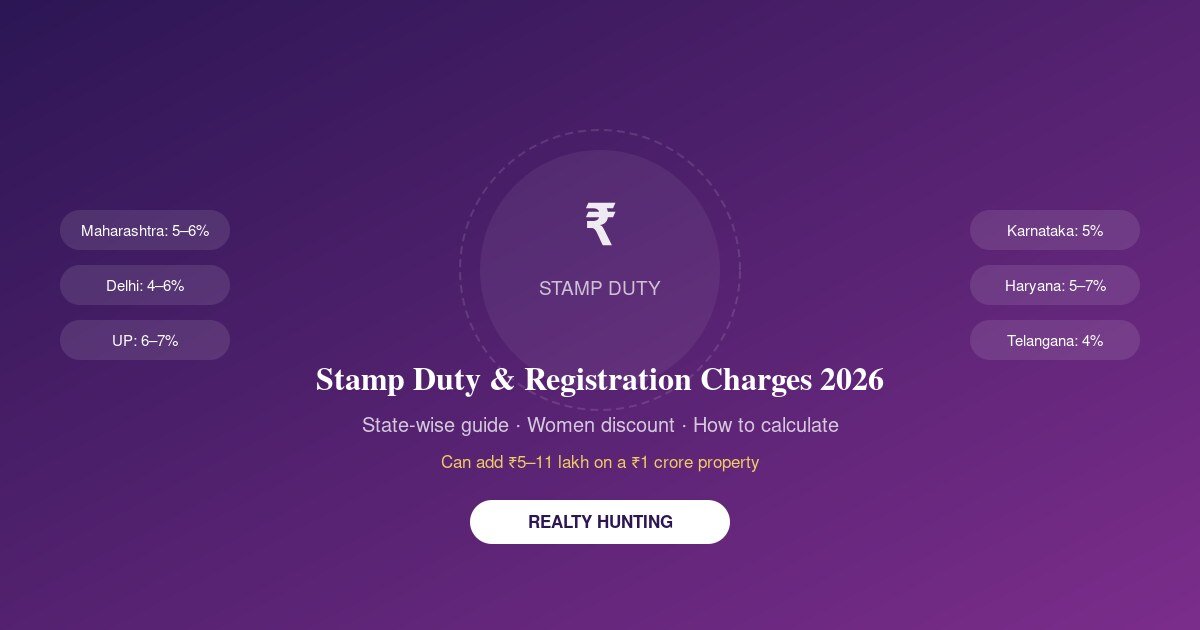
On a ₹1 crore property, stamp duty alone can be ₹4–7 lakh. Add registration charges, and you're looking at ₹5–8 lakh in government fees, payable upfront in cash (they can't typically be folded into your home loan). That's real money, and planning for it is part of planning your home purchase correctly.
This guide covers what stamp duty is, state-wise rates for 2026, women buyer discounts, how to calculate your exact liability, and a few things to watch for.
Key Takeaways
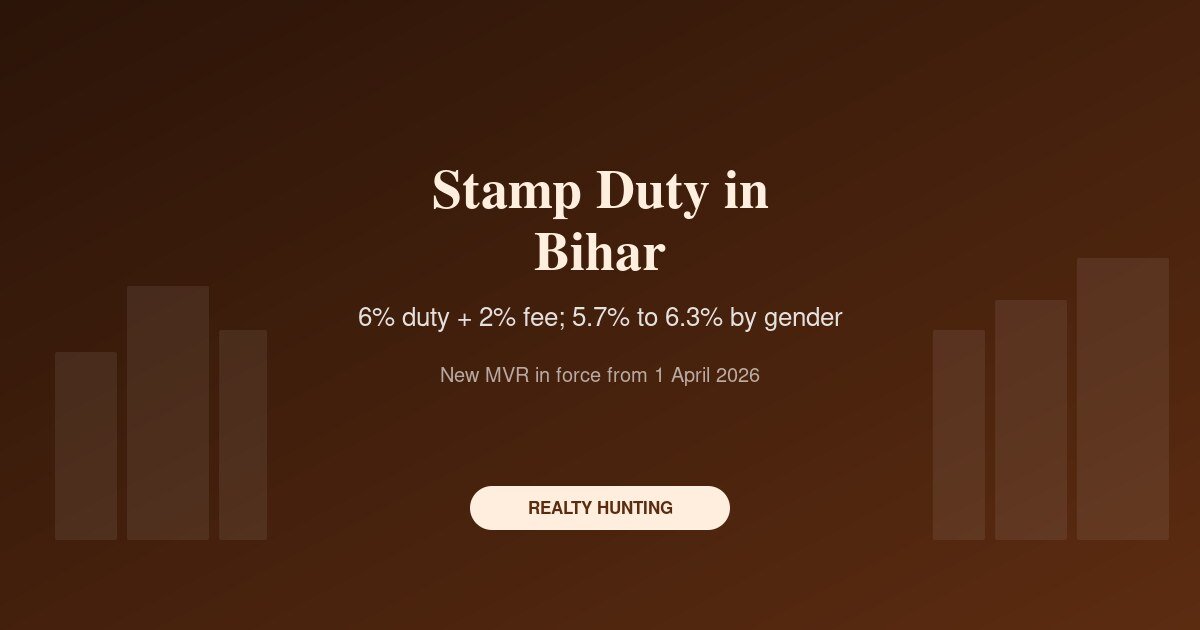
- Stamp duty in India ranges from 3% to 7% of property value, varying by state and buyer gender.
- Registration charges add another 0.5–2% (some states cap it at a fixed amount).
- Most states offer 1–2% lower stamp duty if the property is registered in a woman's name.
- These charges are payable upfront and are NOT part of your home loan (usually).
- Maharashtra caps registration at ₹30,000; Delhi does not.
- Incorrect stamp duty payment = property can't be used as legal evidence in disputes.
What Is Stamp Duty?
Stamp duty is a state-level tax levied on the transfer of property. When you buy a flat, plot, or commercial unit, the transaction has to be recorded at the Sub-Registrar's office. Before registration, you pay stamp duty to the state government. This tax "stamps" the document as legally valid.
Without proper stamp duty, your sale deed can be challenged in court. It's not optional. It's a legal requirement.
Registration charges are separate, they're the fee the Sub-Registrar's office charges to record the transaction in the official property register. Registration makes the ownership transfer publicly verifiable.
State-Wise Stamp Duty Rates 2026
| State | Men | Women | Registration Charges |
|---|---|---|---|
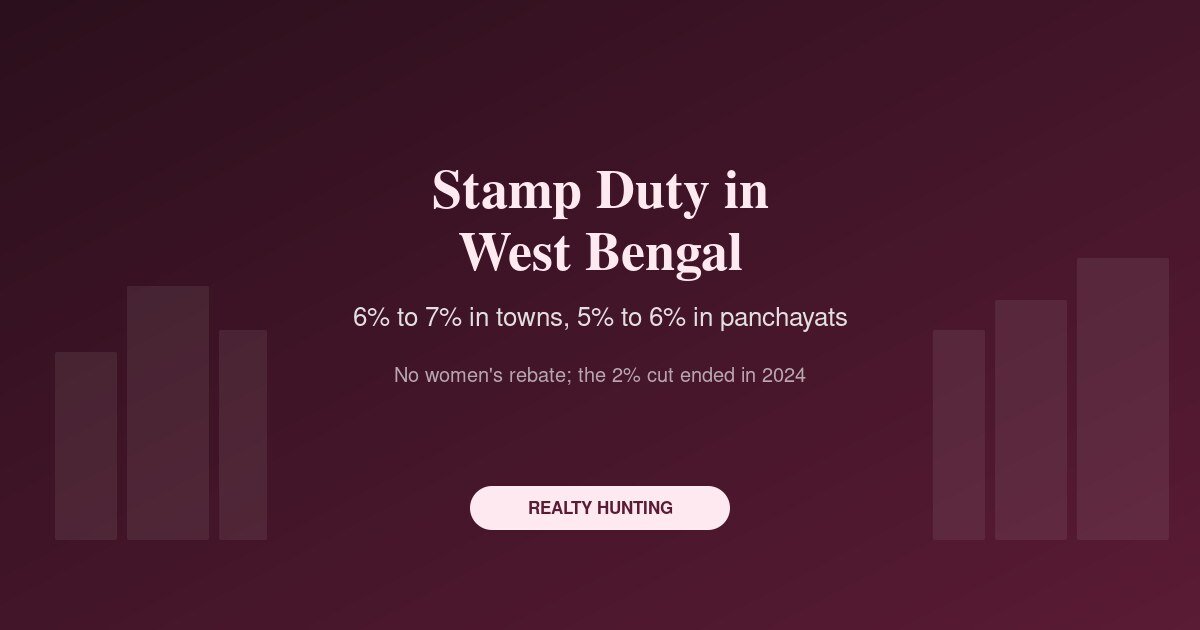
| Maharashtra | 6% | 5% | 1% (capped at ₹30,000) |
| Delhi | 6% | 4% | 1% |
| Uttar Pradesh | 7% | 6% | 1% |
| Karnataka | 5% (urban) | 5% | 1% (≤ ₹45 lakh: 3%) |
| Haryana | 7% | 5% | 3% |
| Rajasthan | 5% | 4% | 1% |
| West Bengal | 6% | 6% | 1% |
| Tamil Nadu | 7% | 7% | 4% (capped at ₹4,000) |
| Gujarat | 4.9% | 4.9% | 1% |
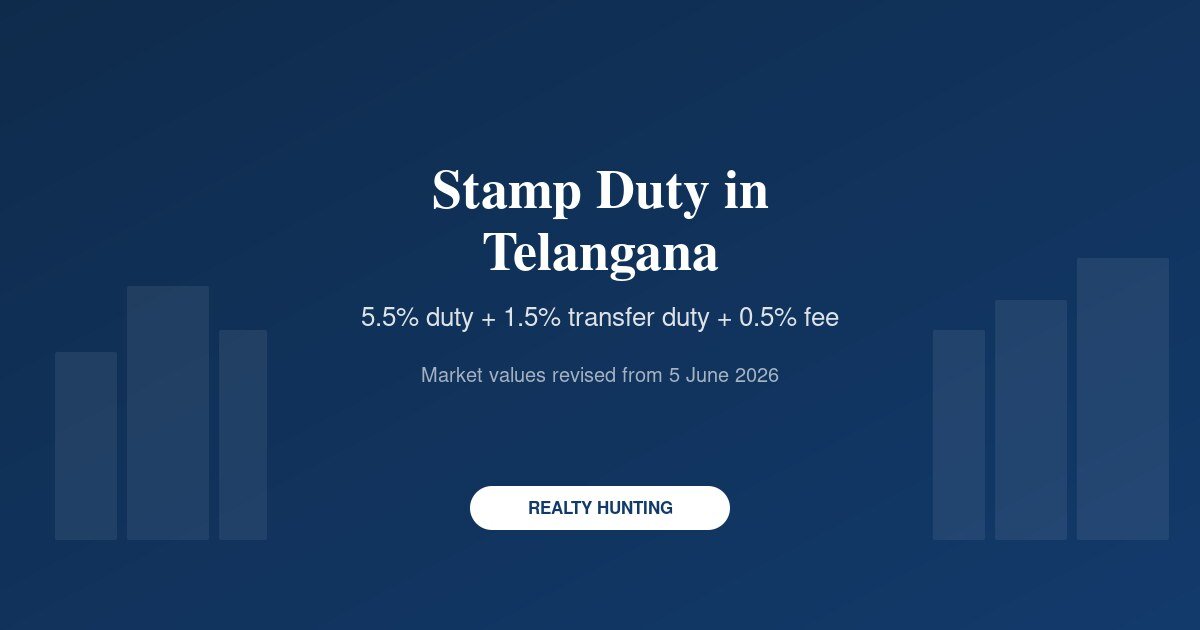
| Telangana | 4% | 4% | 0.5% |
Note: Rates are subject to municipal/local body surcharges in some cities. Always confirm with the state's registration and stamps department portal before finalizing.
A Note on Maharashtra and UP
These two states deserve a closer look because they're the largest property markets by volume.
Maharashtra: 6% for men, 5% for women. On a ₹1.5 crore flat in Mumbai, that's ₹9 lakh (men) or ₹7.5 lakh (women) in stamp duty. Plus registration: 1% of market value, capped at ₹30,000 (so max ₹30,000 regardless of property price). Total transaction tax on a ₹1.5 crore flat: ₹7.8–9.3 lakh.
Uttar Pradesh: 7% for men, 6% for women, plus 1% registration (no cap mentioned). On a ₹80 lakh flat in Noida, stamp duty is ₹5.6 lakh (men) or ₹4.8 lakh (women), plus ₹80,000 registration. Total: ₹5.6–6.4 lakh.
Women Buyer Discount: How It Works
Most major states offer 1–2% lower stamp duty for women buyers. This applies when: - The property is registered solely in the woman's name, OR - In some states, when a woman is the first named owner in a joint purchase.
This discount is significant. On a ₹1 crore property in Delhi, it's the difference between paying ₹6 lakh (men) and ₹4 lakh (women), a saving of ₹2 lakh. That's not trivial.
How to use it: If you're a couple buying jointly, consider registering with the woman's name first. Confirm the specific state's rule, some require the woman to be the sole owner, others allow joint (woman first). The rule varies and is worth verifying at the local sub-registrar before finalizing your sale agreement.
Circle Rate vs Market Price: Which Is Used?
Stamp duty is calculated on the higher of: 1. The actual transaction price (sale consideration), or 2. The government's circle rate (also called ready reckoner rate or guidance value).
If you're buying a ₹80 lakh flat but the circle rate for that locality says the minimum is ₹90 lakh, you'll pay stamp duty on ₹90 lakh, even though you paid less. This is common in some NCR micro-markets and tier-2 cities where market prices have corrected but circle rates haven't been updated.
Why this matters: You need to check the circle rate for the specific locality before negotiating the property price. If the price you're negotiating is significantly below circle rate, you still have to pay duty on the higher number.
How to Calculate Your Exact Liability
The formula is simple:
Stamp duty = Property value (or circle rate, whichever is higher) × State stamp duty rate
Registration charges = Property value × Registration rate (subject to any cap)
Example: 2BHK flat in Pune at ₹90 lakh (Maharashtra)
- Stamp duty (male buyer): 6% of ₹90 lakh = ₹5.4 lakh
- Stamp duty (female buyer): 5% of ₹90 lakh = ₹4.5 lakh
- Registration: 1% of ₹90 lakh = ₹90,000, capped at ₹30,000
- Total (male): ₹5.7 lakh
- Total (female): ₹4.8 lakh
Most state governments have online stamp duty calculators. In Maharashtra, use the IGR Maharashtra portal. In Delhi, use the Delhi Registration Deed portal. In UP, use the IGRSUP portal (stamps.up.gov.in).
Is Stamp Duty Included in Your Home Loan?
Technically, stamp duty and registration charges are not part of the property cost for home loan calculation. Most banks will not fund these separately. However:
- Some lenders (SBI, HDFC, Axis) do include stamp duty in the "total cost" for loan calculation, which can indirectly push the loan amount slightly higher.
- Typically, you are expected to bring stamp duty and registration as your contribution, separate from the down payment.
If you're already at the edge of your liquidity after the down payment, this is critical to plan for in advance.
When Is Stamp Duty Paid?
Stamp duty is paid before the sale deed is executed, before you sign the final registration documents. In most states, you pay it online (e-stamping) and then present the e-stamp certificate at the sub-registrar office on the day of registration.
HDFC's MahaREIT portal in Maharashtra, SHCIL in other states, and state-specific portals accept payment. On the day of registration, both buyer and seller (or their representatives) must be present with original identity documents. The sub-registrar scans, witnesses, and officially records the document.
Refund: Can You Get Stamp Duty Back?
If a property deal falls through after stamp duty is paid but before registration, you can apply for a refund in most states, but: - Refund claims must be filed within a specific window (6 months to 2 years depending on the state). - A deduction of 10–25% may be applicable as processing fee. - The refund process is slow, expect 3–12 months.
Don't pay stamp duty speculatively before you're certain the deal is final.
GST on Under-Construction Property
One additional charge that catches buyers off guard: if you're buying an under-construction flat from a developer (not a resale), you also pay 5% GST on the property value (1% for affordable housing). This is separate from stamp duty.
On a ₹1 crore under-construction flat: - GST: ₹5 lakh (at 5%) - Stamp duty (Maharashtra, male): ₹6 lakh - Registration: ₹30,000 - Total government charges: ₹11.3 lakh
That's over 11% added to your purchase price in government fees alone, before any broker commission.
For a ready-to-move or resale flat, there is no GST, only stamp duty + registration.
Five Practical Tips
- Always verify the circle rate for the specific survey number / property address. Rates differ by lane in some older cities.
- Register in a woman's name (or woman first) if the discount applies in your state, the 1–2% saving is meaningful.
- Budget for stamp duty separately from your down payment. It's a cash outgo that most banks don't finance.
- Don't negotiate the stamp value below market, under-valuing a property to save stamp duty is illegal and can lead to notices from the revenue department, penalties, and title challenges.
- Keep all payment receipts, e-stamp certificates, challans, and registration receipts are documents you may need years later for capital gains calculations on resale.
See properties across India at Realty Hunting or check new launches with complete cost breakdowns.
FAQ
Q: Can I pay stamp duty in cash? In most states, e-stamping through government portals (net banking or challan) is required. Cash payments are not accepted for property transactions above certain values.
Q: Do I pay stamp duty on both the agreement for sale and the final sale deed? Some states (like Maharashtra) have a process where you pay stamp duty on the agreement first and then adjust it at final registration. Check your state's specific rule.
Q: Is stamp duty the same for agricultural and non-agricultural land? No. Rates for agricultural land, NA (Non-Agricultural) plots, and built-up property differ by state. Agricultural land also has separate conversion and permission requirements.
Q: What if the developer undervalues the property in documents? This is fraudulent and exposes both you and the developer to tax recovery, penalties, and potential criminal action. The revenue department conducts checks and can demand reassessment any time within 6–7 years.
Q: Is GST input credit available on under-construction flats? No, if you're buying as an individual end-user, you cannot claim GST input credit. Only registered businesses buying for office use can potentially claim this. For residential buyers, GST is an actual cost.
Questions about total cost of buying a property? Talk to a Realty Hunting advisor through our projects page.
What approvals should a project have?
A valid licence, RERA registration, sanctioned building plans and, for ready homes, an occupancy certificate. Match the actual construction to the approved plan.
What is a completion certificate?
It confirms the building was completed as per the approved plan and local rules. Along with the occupancy certificate, it matters for legal, loan and resale purposes.
How do I check land records online?
Most states publish land records online where you can verify ownership and dues. Our land records guide shows how.
What stamp duty and registration charges apply in Gurgaon and NCR?
Stamp duty and registration vary by state and are usually a few percent of the property value, with a small rebate for women buyers in many states. Confirm the current Gurgaon and NCR rate before you budget.
How much home loan can I get to buy in Gurgaon and NCR?
Most buyers get a loan for 75-90% of the value, tied to income and credit score. Our home loan by salary guide shows the ranges.
What documents do I need to buy property in Gurgaon and NCR?
Identity and address proof, PAN, income papers for a loan, and the property title chain, approvals and latest tax receipts. Keep both sides KYC ready for registration.
How do I check if a project is RERA-registered?
Search the state RERA portal by project or builder name for the registration number and approved plan. Our RERA check guide explains it.
Can NRIs buy property in Gurgaon and NCR?
Yes, NRIs can buy residential and commercial property in India, though not farm land. Payments must come through banking channels, and a trusted power of attorney helps if you are abroad.
What taxes apply when I sell property in Gurgaon and NCR?
You pay capital gains tax on the profit, lower if you hold beyond the long-term period, with reliefs if you reinvest in another home. Take advice before you sell.
Is it a good time to buy in Gurgaon and NCR?
Timing matters less than buying the right property at a fair price with clean papers. If a home fits your budget and needs, waiting for a perfect market rarely pays.
How do I verify a property title in Gurgaon and NCR?
Check the chain of ownership, the latest record, any loan or lien and pending dues, and match the seller identity to the title. A local lawyer can vet the deed.
What should I check during a site visit in Gurgaon and NCR?
Construction quality, water and power backup, the neighbourhood, road access, and how the actual unit compares to the brochure. Visit at different times of day if you can.
Can I negotiate the price in Gurgaon and NCR?
Resale and ready inventory are usually negotiable, while fresh launches have fixed rates but may waive some charges. Compare recent deals nearby to judge a fair price.
What is the difference between carpet area and super area?
Carpet area is the usable space inside your walls; super area adds a share of common areas. Always confirm the carpet area you actually get before comparing prices.
What extra costs come beyond the price in Gurgaon and NCR?
Budget for stamp duty and registration, GST on under-construction homes, parking, club and maintenance deposits, and loan fees. Ask for a full cost sheet upfront.
How does Realty Hunting help me buy in Gurgaon and NCR?
We share verified listings, honest area advice and the real paperwork picture, and connect you with builders and sellers. Reach out and we will shortlist options that fit your budget.