Where do the rich live in Delhi
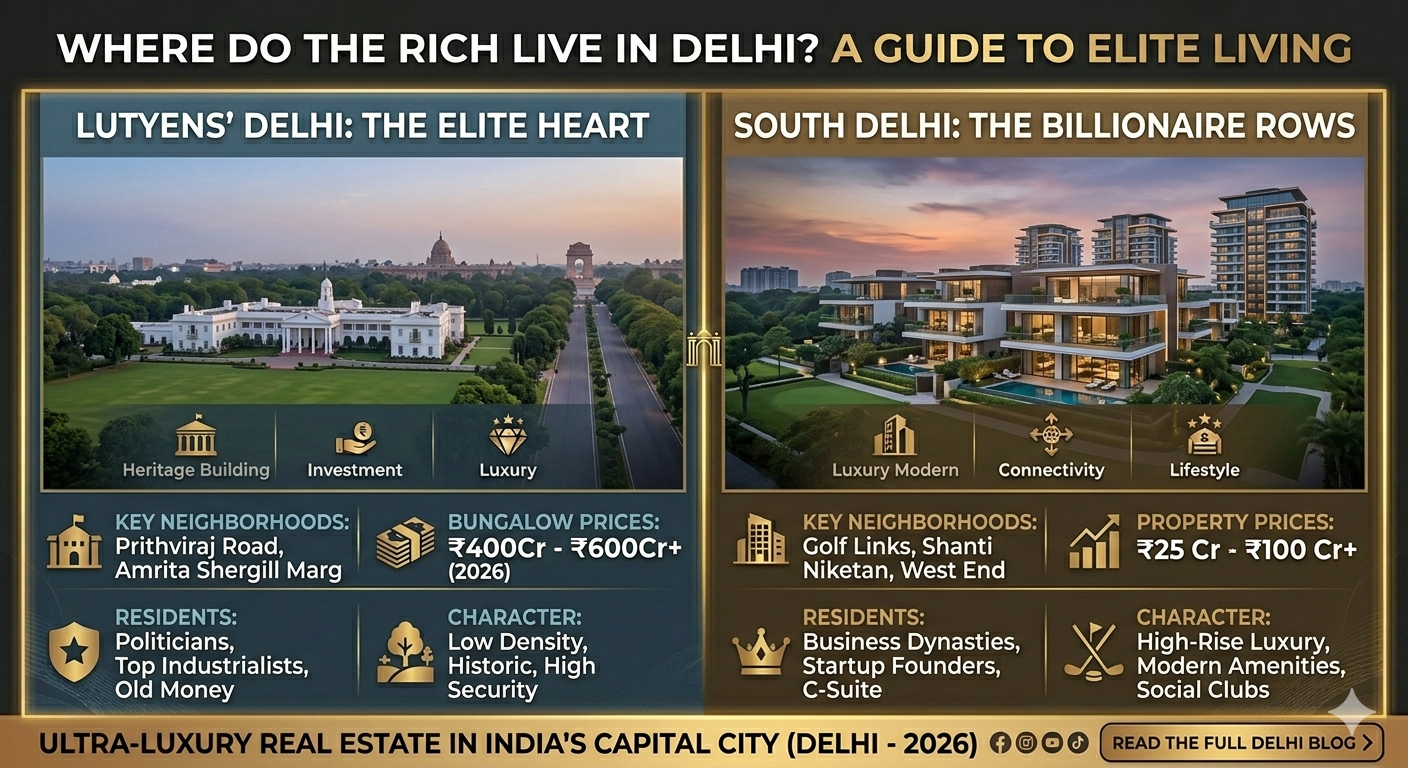
Where do the rich live in Delhi : The richest places in Delhi are mostly found in South Delhi and the central Lutyens Bungalow Zone, which has ultra-luxurious bungalows, highest level security and huge property price that may be 30-500 Crore. Other major posh areas are Lutyens Delhi, Shanti Niketan, Golf Links, Jor bagh, Maharani bagh and Greater Kailash.
- Lutyens Delhi: the most elite of all with politicians, bureaucrats, and leading business tycoons with big bungalows and green belts.
- Shanti Niketan: the swanky residential colony was initially constructed as a government quarters but is now inhabited by affluent industrialists.
- Golf Links: It is a very luxurious part of Delhi situated close to the Delhi Golf Club and is a place with exclusive and high priced bungalows.
- Maharani Bagh: Famous for its huge, premium bungalows, and closeness to Yamuna River, usually occupied by wealthy and influential business families.
- Jor Bagh: A high-end picturesque residential area with Lutyens, Delhi, and a location with high-valued properties.
- Greater Kailash (GK 1 & 2): It is characterized by exclusive shopping streets, premium lower floors, and affluent life.
- Chanakyapuri: It is the diplomatic enclave and provides the safeguarded bungalow residence to the top officials and diplomats.
- Panchsheel Park: A wealthy neighborhood that is preferable due to its greenery and huge residential bungalows.
- New Friends Colony: This is a premium and quiet area in South Delhi.
- Defence Colony: This is found at the centre of the location with high quality boutiques and luxury houses.
Luxury Real Estate Highlights.
Property Prices: The prices of places such as Lutyens Delhi are so high that a bungalow or property there could cost you above 500 Crore, whereas prime locations such as South Delhi (Shanti Niketan, Jor Bagh) would cost you 15-60 Crore in terms of luxury plots.
Rentals: Monthly rentals in the best locations may go up to 5 to 25 Lakh.
Environment: These are places characterized by the vast green cover, excellent facilities, high-end shopping centers, and extreme security.
Disclaimer: The prices of real estate are subject to change very often depending on the situation on the market, the location of the plot, and the size of the property.
The affluent and the ultra-high-net-worth people (UHNWIs) in Delhi have the luxury to live in the historic Lutyens’ Delhi and the affluent South Delhi neighborhoods. These are the zones that are typified with long large bungalows, high security, as well as some of the most priciest real estate per square foot in the entire world.
1. Lutyens’ Bungalow Zone (LBZ)
It is the most upscale residential neighborhood of India, where the best politicians, international industrialists, and billionaires live.
Important Areas: Prithviraj Road, Amrita Shergill Marg, and Dr. APJ Abdul Kalam Road.
The Vibe: Huge colonial-style bungalows and large lawns and lots of security.
Prices: Prices of Properties in this area are usually in the range of several hundred crores and a single bungalow was recently sold to 400-600 Crore.
2. The Billionaire Rows of South Delhi.
Preferred choice Delhi is South Delhi among the old business families and high-profile employees.
Shanti Niketan and West End: Diplomats and the finest industrialists. They are sparse, calm, and highly-exclusive.
Golf Links: This is a location near Delhi Golf Club and is the place of the old-money elite in the city.
Jor Bagh: This is a much in demand area with a view of the historic Safdarjung Tomb and Lodhi Gardens.
Panchsheel Park and Vasant Vihar: The area is characterized by big standalone houses and closeness to high-society clubs and foreign educational institutions.
3. Diplomatic Enclave (Chanakyapuri)
Although Chanakyapuri is mainly recognized as a place where there are embassies, some of the most powerful individuals in the city are found in the high-security mansions and ultra-luxury apartments complexes.
4. Upcoming Luxury Pockets
Although the old money remains up the ladder in the aforementioned areas, a new breed of money is shifting into high-rise apartments and country property:
DLF Chattarpur Farms: Large plots of land covering multiple acres, frequently located as first homes of business magnates.
New Friends Colony / Maharani Bagh: Rich neighbourhoods in South East Delhi characterized with big family houses.
Luxury Lifestyle Hubs
The locals of these neighborhoods often visit social and retail centres of high end like:
DLF Emporio (Vasant Kunj): the largest luxury mall in India with such brands as Louis Vuitton and Gucci.
The Chanakya (Chanakyapuri): A luxury shopping complex and restaurant.
Khan Market: This is the highest priced retail street in the planet, a social centre of the Lutyens crowd.
Frequently Asked Questions
What red flags should I watch for when buying?
Unclear title, missing approvals or RERA, pending dues, a builder with delays, and prices far below the market. If something feels rushed, slow down and verify.
What is the difference between capital appreciation and rental yield?
Appreciation is the rise in the property value over time; rental yield is the annual rent as a share of the price. Most Indian homes give modest yield and rely on appreciation.
How much should I keep as a buffer beyond the price?
Set aside for stamp duty, registration, GST where it applies, interiors, and a contingency. A buffer of a meaningful share above the base price is prudent.
Is a home loan pre-approval useful?
Yes, a pre-approved loan tells you your budget, speeds up booking and strengthens your negotiating position with sellers. Get it before you shortlist seriously.
How do I choose between two similar projects?
Compare the builder record, RERA status, carpet area, real amenities, connectivity and total cost, not just the headline price. Visit both before deciding.
What stamp duty and registration charges apply in Delhi?
Stamp duty and registration vary by state and are usually a few percent of the property value, with a small rebate for women buyers in many states. Confirm the current Delhi rate before you budget.
How much home loan can I get to buy in Delhi?
Most buyers get a loan for 75-90% of the value, tied to income and credit score. Our home loan by salary guide shows the ranges.
What documents do I need to buy property in Delhi?
Identity and address proof, PAN, income papers for a loan, and the property title chain, approvals and latest tax receipts. Keep both sides KYC ready for registration.
How do I check if a project is RERA-registered?
Search the state RERA portal by project or builder name for the registration number and approved plan. Our RERA check guide explains it.
Can NRIs buy property in Delhi?
Yes, NRIs can buy residential and commercial property in India, though not farm land. Payments must come through banking channels, and a trusted power of attorney helps if you are abroad.
What taxes apply when I sell property in Delhi?
You pay capital gains tax on the profit, lower if you hold beyond the long-term period, with reliefs if you reinvest in another home. Take advice before you sell.
Is it a good time to buy in Delhi?
Timing matters less than buying the right property at a fair price with clean papers. If a home fits your budget and needs, waiting for a perfect market rarely pays.
How do I verify a property title in Delhi?
Check the chain of ownership, the latest record, any loan or lien and pending dues, and match the seller identity to the title. A local lawyer can vet the deed.
What should I check during a site visit in Delhi?
Construction quality, water and power backup, the neighbourhood, road access, and how the actual unit compares to the brochure. Visit at different times of day if you can.
Can I negotiate the price in Delhi?
Resale and ready inventory are usually negotiable, while fresh launches have fixed rates but may waive some charges. Compare recent deals nearby to judge a fair price.
What is the difference between carpet area and super area?
Carpet area is the usable space inside your walls; super area adds a share of common areas. Always confirm the carpet area you actually get before comparing prices.